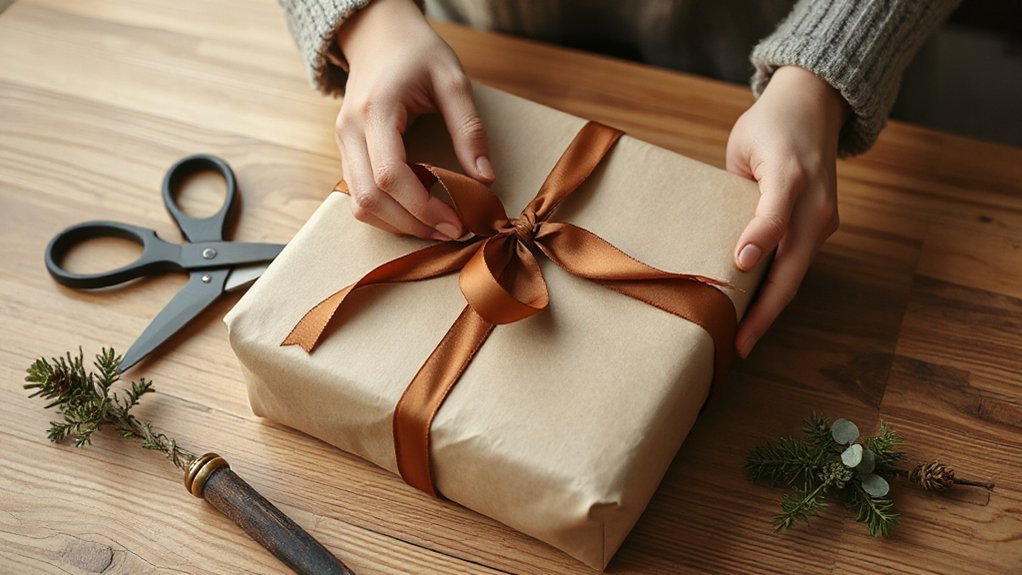
The first time I wrapped a gift it looked like a crumpled map, and that flop taught me more than any tutorial — so listen up, you’ll get clean lines, not chaos. You’ll gather good paper, sharp scissors, sturdy tape, and a bone folder, feel the weight of the paper in your hands, cut straight with a ruler, fold crisp corners, and learn the tiny tricks that make people say, “Wow.” I’ll show you the steps that save time and paper, and why one neat bow changes everything.
Key Takeaways
- Gather essential tools: sharp scissors, craft knife, metal ruler, cutting mat, sturdy tape, bone folder, tags, and tissue paper.
- Choose appropriate paper and ribbon: heavier paper for durability, ribbon scale matching gift size, and contrasting textures for visual interest.
- Measure precisely and cut cleanly: measure twice, use a straight-edge and sharp blade for crisp, straight edges.
- Fold and secure neatly: pull paper taut, crease outward, use a bone folder for sharp seams, and tidy corners with careful folds.
- Finish professionally: add layered ribbons or natural embellishments, create a crisp bow, and attach a handwritten tag for a personal touch.
Essential Supplies Every Wrapper Should Own
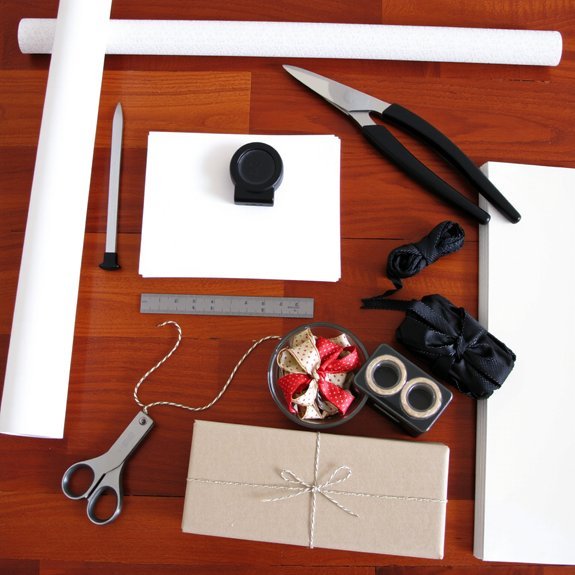
If you want your gifts to look like you actually tried (and not like you wrapped them in a frantic five-minute panic), you’ll need the right tools—no excuses. I tell you straight: start with a solid list of gift wrapping essentials —scissors that bite clean, a sharp craft knife for stubborn corners, a metal ruler you can hear tap the table, and a cutting mat that saves your sanity. Add sturdy tape, yes, but don’t forget decorative tape for flair; it’s like lipstick for packages. Keep a bone folder for crisp folds, stylish tags, and a stash of tissue paper that smells faintly like holidays. I coach you through quick setups, little rituals, and the smug pleasure of a perfectly folded corner.
Choosing the Right Paper and Ribbon for Each Gift
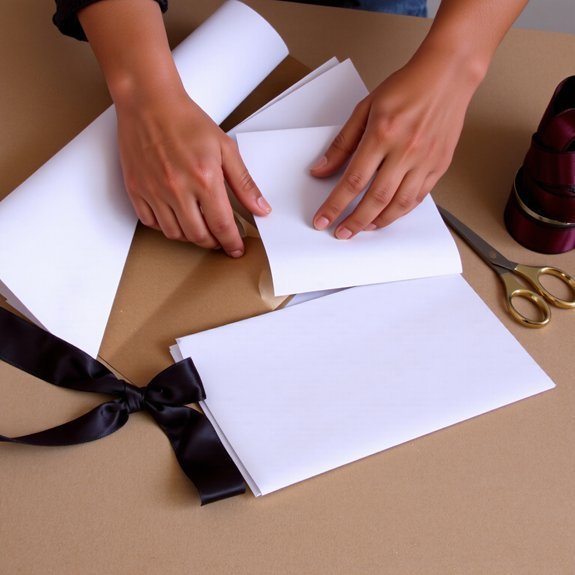
You’ll feel the difference the moment you lift the paper — heavy stock drapes like velvet, thin sheets crinkle and show every edge, so pick weight and texture that flatters the shape. Match ribbon style and scale to that choice: a wide grosgrain tames a big box, a skinny satin whispers on a slim gift, and I’ll admit I’ve tied more wonky bows than I care to confess. Let’s compare textures and spool sizes next, I’ll show you what works and what gets tossed.
Paper Weight and Texture
Paper matters—like a handshake before a conversation, it sets the whole mood. You’ll feel the difference the moment you touch it: silky, toothy, crinkly. I tell you to scout texture variety—matte for restraint, gloss for pop, handmade for drama. Heavier stock resists tears, holds sharp corners, hides sloppy folds; that’s paper durability, your secret weapon. Light sheets work for awkward shapes, they flutter and conform, but they wrinkle, so handle them slowly. Rub the edge, crease with bone folder, listen for that crisp snap. Smell matters too — a faint paper scent says real effort. You’ll choose weight like choosing shoes: comfy or statement. Trust your hands, test a corner, and wrap like you mean it.
Ribbon Style and Scale
Now that you’ve felt the paper—its weight, its whisper, its little attitude—let’s talk ribbon, because a bow can make a sweater sing or a box look like it tried too hard. You’ll choose ribbon types to match scale: skinny velvet for delicate jewelry, wide grosgrain for bulky boxes, satiny curl for playful parcels. Think texture against paper, contrast or blend, color that hums. Measure ribbon lengths with a confident thumb—long enough for loops and tails, short enough to avoid a necktie calamity. I like a tidy three-loop bow on small gifts, a dramatic layered bow on large ones. Tie, trim, fluff. Step back, squint, adjust. If it looks a bit smug, you’re done; if not, add a sprig or fewer tails.
Measuring and Cutting Paper for Clean Edges
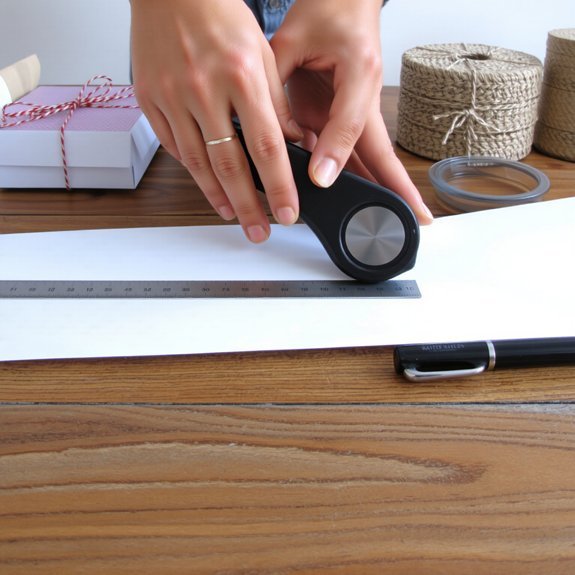
You’ll want to measure twice and cut once, because crooked edges scream “last-minute” from across the room. Grab a sharp blade and a straight-edge, press firm against the paper, and feel that satisfying, whisper-snap as the scissors-free cut glides through. Trust me, your corners will thank you—neat lines, clean creases, and no sad paper tears.
Measure Twice, Cut Once
If you want crisp, museum-worthy edges, measure twice and cut once — no drama, no sad jagged flaps. I tell you this like a parent who’s seen one too many ripped corners. Lay your box down, smooth the paper, and use basic measuring techniques: wrap the paper around, mark overlap with a pencil, measure height for neat end flaps. I like taps and small visual checks, you’ll too. Pick reliable cutting tools, feel the blade glide, don’t hack. Hear the soft slice, see the clean line — satisfying. Pause, breathe, re-check marks, then cut. If you mess up, shrug, adjust, laugh — we’ll fix it. Practice makes perfection; confidence follows, and the gift looks sharp.
Use Sharp Straight-Edge
Alright, so you’ve measured like a saint and cut like a novice — time to bring in the tool that actually saves your dignity: a sharp straight-edge. You grab it, feel cold metal under your palm, and I tell you, this is where fancy wrapping looks happen. Lay the paper flat, line up the straight-edge with your pencil mark, watch the edge alignment lock in like a promise. Use scissors only for curves; rely on cutting tools that ride the ruler for long, clean slices. Press down, glide the blade, listen for that smooth whisper. No jagged teeth, no ragged corners. Fold, crease, admire. You’ll look pro, even if your ribbon’s a little crooked.
Folding Techniques for Crisp Corners and Seams
When I fold a corner just so, the paper snaps into a sharp ridge and I feel a tiny, victorious zing—like getting the last puzzle piece in place. You’ll learn corner folding that makes boxes look tailored, neat, somehow gourmet. Pull the paper taut, crease outward, then tuck the flap under with a thumb, listen for that crisp whisper. For seams, press flat, then run a fingernail or bone folder along the joint, sealing with tiny, invisible tape. If the edge puckers, unfold slightly, re-tension, try again—no shame in redo. Work slowly where corners meet, trim a sliver for bulky overlaps, keep angles clean. You’ll finish faster, look practiced, and still blame the cat if it goes wrong.
Professional Finishing Touches and Embellishments
Because the last five minutes are where gifts go from “nice” to “someone cared,” you’re going to learn the little moves that make people look twice. You’ll add gift embellishments and decorative accents that feel thoughtful, not try-hard. I show you how to layer texture, tie a bow that sits right, and tuck a sprig that smells like winter.
- Use ribbon textures: satin, jute, velvet, mix them.
- Add small items: dried orange, cinnamon stick, tiny ornament.
- Fold a crisp bow: loop, pinch, cinch, secure with wire.
- Attach a tag: handwritten, angled, sealed with wax.
You’ll finish like a pro, fingers neat, smile smug, present ready to impress.
Time-Saving Shortcuts and Waste-Reducing Tips
Those final ribbons and sprigs look dreamy, but they can eat time and paper if you’re not careful — so I’m going to show you how to get the same “wow” with half the fuss. I’ll teach you quick folds, and how to prep a whole stack of boxes like a wrapping assembly line, so you won’t feel like you’re wrestling tinsel at midnight. Use time management: set a 20-minute sprint, cut all paper at once, stash tape where you can’t miss it. Choose eco friendly materials — kraft paper, fabric scraps, twine — they look chic, smell faintly homey, and toss less. I’ll show you a faux-bow trick that fools grandparents, saves ribbon, and makes you look practically professional.
Conclusion
You’ll wrap like a pro, I promise — picture crisp paper whispering under your fingers, corners sharp as a new razor, tape hiding like a shy friend. You measure, snip, fold, press with a bone folder, and the box transforms. Step back, admire the clean edges, add a ribbon that sings, scribble a tag with a flourish. It’s simple ritual, a small thrill, and yes, you’ll feel quietly smug — in the best way.