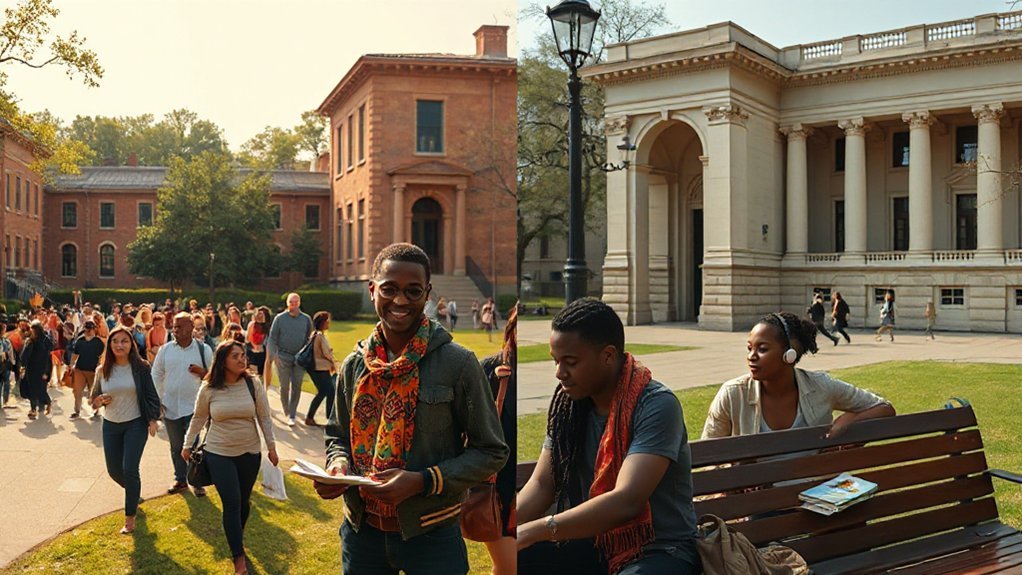
You’ll notice the vibe the minute you step on campus — warm laughter and brass band drums at an HBCU, brisk caffeine-fueled hustle at a PWI — and you’ll feel it in how professors call you by name, or don’t. I’ll walk you through history, mentoring, classroom energy, traditions, and the kind of networks that open doors, but first: pick a campus tour photo and hold on, because the real differences sneak up on you.
Key Takeaways
- HBCUs emphasize culturally affirming communities where Black identity, traditions, and mentorship are central to daily student life.
- PWIs offer broader racial diversity but can leave minority students feeling isolated or needing to code-switch in classrooms.
- HBCU advising and mentorship are often personalized and alumni-driven, fostering close career networks and hands-on support.
- PWIs typically provide wider academic program breadth and larger-scale career services, yet mentorship may be more formal and less personal.
- Campus vibe and safety differ: HBCUs rely on community caretaking and cultural rituals; PWIs use institutional security and technology-focused systems.
Historical Roots and Institutional Missions

If you walk onto a historically Black college campus, you’ll feel history in the air — like warm coffee and old books, but louder, with brass band notes and chapel songs threading through the quad; I know, I’ve stood under those oaks and listened. You’re stepping into a mission born of necessity, slavery’s aftermath and Jim Crow’s stubborn shadow, where education was resistance. I’ll tell you plainly: HBCUs were built to teach, uplift, and protect Black minds, to make leaders out of overlooked folks. PWIs, by contrast, often started with different founders, different promises, different power. You’ll notice traditions that grew from survival, ceremonies that stitch community close, faculty who expect you to rise. It’s history that shapes daily life, in small ways and big.
Campus Demographics and Community Makeup
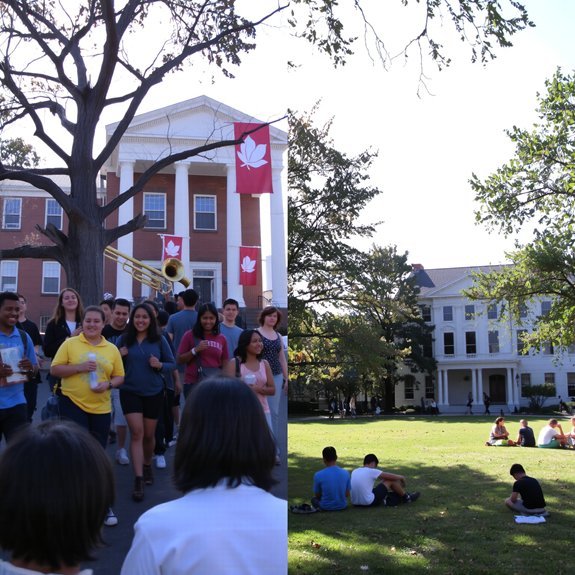
Because where you step on campus matters, you’ll notice the crowd before you register for classes — who’s laughing on the bench, who’s selling flyers, who’s singing in the practice room — and it tells a story. You see who’s come from the neighborhood, who flew in from across the country, who’s balancing work and study, and that mix shapes daily rhythms. Walk the quad, smell coffee, hear accents, spot student org tables — you’ll get a feel fast. I’ll say it bluntly: demographics change routines, majors, food options, even late-night study spots. You pick a campus vibe, it picks you back. Imagine this diversity:
Where you walk on campus tells a story — the mix of people shapes rhythms, majors, food, and late-night spots.
- Racial and ethnic makeup that sets the tone.
- Geographic origins, urban vs. rural energy.
- Age, veterans, commuting students — life stages visible.
Sense of Belonging and Cultural Affirmation
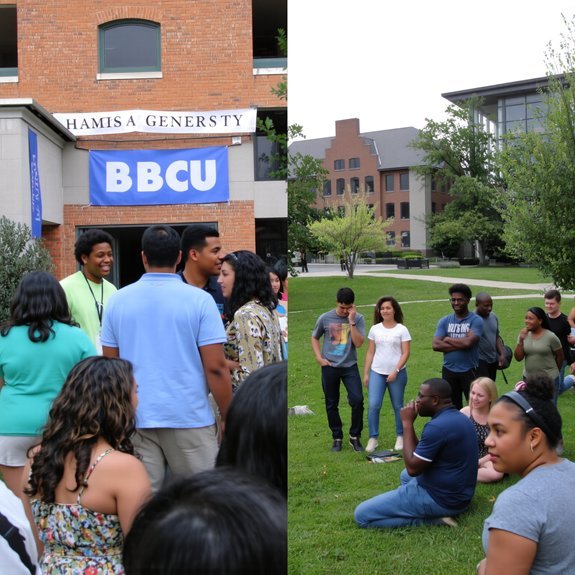
You notice the faces on the quad, then you start feeling the vibe — and that feeling either greets you like an old friend or makes you scan for the nearest exit. You stroll past flyers, hear a drumline, catch laughter that sounds like history and homework mixed. At an HBCU, nods feel like invitations, cultural touchstones pop up everywhere, and even your lunch choices whisper familiarity. At a PWI, you sometimes become the only voice in a room, so you gauge reactions, clip your slang, or teach a joke twice. Belonging shows up in small rituals, in who calls your name, in who knows your playlist. You crave that mirror, that safety, that quiet permission to be unabashedly you.
Academic Programs, Advising, and Mentorship
You’ll notice programs here can be deep and narrowly focused, or broad and experimental, so you’ll want to scan syllabi like a detective. I’ll point out how advising models differ — some advisors hand you a map, others walk the route with you — and you’ll hear about mentorship networks that feel like family or like a professional Rolodex. Read on, and we’ll compare course rigs, advising styles, and who’ll actually pick up the phone when you need help.
Program Depth and Focus
When I walked into my first advising meeting, I expected brochures and polite smiles; what I got was a roadmap and someone who actually remembered my name, which felt like finding an extra fry at the bottom of the bag—small, glorious, life-affirming. You learn fast that program depth isn’t about a flashy title, it’s about how deep you can go, hands-on, late nights in a lab, that one professor who gives you real feedback, the internship lead that smells like coffee and possibility. At HBCUs you might get tight, specialized tracks with mentorship baked in; at PWIs you’ll often find broad offerings, niche labs, and stacked resources. Envision this:
- Focused curriculum, apprenticeship vibe, professor who texts you deadlines.
- Wide catalog, research clusters, graduate labs humming at midnight.
- Hybrid paths, industry ties, capstones that make your portfolio sing.
Advising Models Compared
After talking about late-night labs and the professor who texts deadlines, let me tell you what really tells you where you’ll land: the advising model. You’ll notice the vibe the moment you walk into advising—desk cluttered with sticky notes, a smiling advisor who knows your major and your grandma’s name, or a cavernous office staffed like an airport check-in, blinking screens and appointment slots. At an HBCU, you’ll get holistic check-ins, caffeine-fueled chats, and a plan that fits you, not a template. At a PWI, advising can be efficient, buttoned-up, and transactional, which works if you like structure, less if you need nudges. Either way, learn to ask blunt questions, bring a calendar, and claim your seat at the table.
Mentorship Networks Available
If you like people who show up and actually remember your name, you’ll notice mentorship like a scent in the air the minute you cross campus—warm coffee, sticky notes, a professor leaning on a doorframe saying “tell me what you really want to do.” I say that because mentorship isn’t just a program on a brochure; it’s a wired network of folks who’ll read your draft at midnight, pull strings for internships, or yell “apply!” when you’re dithering — and how loud and personal that chorus is changes by campus. At HBCUs you get familial intensity, alumni who show up with casseroles and résumés. At PWIs you often get formal programs, glossy events, and useful but polite distance. Pick the vibe you want.
- Close-knit alumni mentors who text, visit, and bring food.
- Structured PWI programs with scheduled networking mixers.
- Peer mentorship circles that trade notes, tips, and late-night pep talks.
Social Life, Traditions, and Student Activities
Because college isn’t just classes and chai in your dorm, I’ll tell you straight: social life, traditions, and student activities are where a campus shows its personality. You’ll watch HBCU step shows thunder the quad, feel bass vibrate your chest, see alumni hug strangers like family — rituals that taste like history and fried chicken at homecoming. At a PWI, you’ll find diverse clubs, late-night improv, and campus festivals that mix new cultures, craft beers, and indie bands; you’ll try things, sometimes awkwardly, and laugh later. Both campuses throw late-night energy, club fairs, service days, and protest marches. You’ll join traditions that stick, learn rituals by doing, and leave with stories you tell at weddings, or just to make your friends jealous.
Faculty Representation and Classroom Dynamics
You’ll notice who’s at the front of the room, and trust me, that sight matters — a classroom full of faces that look like yours feels different than one where you’re the odd fit. I’ll point out how mentorship and visible role models change the vibe, how quick hallway pep-talks with a professor can stick with you, and how course examples that smell like your life keep you awake and asking questions. Let’s compare the rhythms — the warm, familiar cues that make learning feel like home, versus the occasional cultural static you’ve got to translate.
Faculty Racial/Ethnic Makeup
When I walk into a classroom at an HBCU, I almost expect the air to hum a little differently — warm, familiar, like someone just put a pot of coffee on the table — and that starts with who’s standing at the front. You notice faculty faces that mirror you, relatives of your neighborhood, professors who smell like markers and gumption. At a PWI, you might scan the room and do mental math, spotting a mismatch, a lone person of color, allies included. That shift alters tone, examples, even jokes, in ways you feel before you name them.
- Diverse faculty bodies, voices, accents — classroom feels like family dinner.
- Mainly white faculty, you translate lessons into your language.
- Mixed faculty, you get more perspectives, sometimes delightful friction.
Mentorship and Role Models
A mentor at an HBCU often looks like your aunt’s favorite cousin — familiar, blunt, and ridiculously proud — and that changes how you learn, plain and simple. You walk into office hours, they clap you on the back, they call you by a childhood nickname you didn’t know you had, and suddenly theory feels like advice, not a test. At PWIs, you’ll find brilliant mentors too, but you might search a little longer, send more emails, rehearse your questions. You notice role models who share your skin, your hair stories, your jokes, and that matters — it makes courage contagious. Mentorship here is hands-on, warm, direct; it’s critique with sugar, firmness with hugs, and pathways that feel reachable.
Classroom Cultural Relevance
Because who taught you matters, classroom vibes don’t just sit on the syllabus — they hum in the air, they smell like coffee and chalk, and they change how you lean in. You notice who’s up front, you catch the jokes, you read the examples, and you decide if this room is yours. At an HBCU you’ll often see faces that mirror your history, hear ancestry in lectures, and feel permission to speak loud. At a PWI you might search for a nod, adapt your examples, and teach people about you. Both rooms can sing, or they can echo.
- Professors who share your background, who nod, who call you by name.
- Curricula that include your stories, not footnotes.
- Classrooms where you’re invited to fix the syllabus, not just take the test.
Career Services, Alumni Networks, and Internships
If you want a job lead or a mentor who actually remembers your name, you’ll notice big differences between HBCU and PWI career systems right away — and I say that as someone who’s sat in too many awkward networking mixers clutching a paper cup of coffee. At an HBCU, you’ll feel alumni lean in, handshakes firm, voices saying, “Call me,” like they mean it; internships often come through personal ties, summer programs with room-and-board, boots-on-the-ground access. At a PWI, career fairs can feel corporate, polished, efficient — helpful, but less personal; you’ll chase online postings and automated replies. Either way, you’ll learn to network aloud, polish a resume until it shines, and practice a quick, memorable pitch that sticks.
Safety, Resources, and Mental Health Support
When you walk across campus at night, you notice things right away — the HBCU quad might hum with folks borrowing a flashlight and a laugh, while the PWI pathways often glow under neat lines of LED lights and security cameras, like a very polite spaceship. You pick up on vibe, and you care about help when stuff goes sideways. HBCUs often lean on tight-knit check-ins, profs who know your name, and community watch; PWIs invest in visible tech, patrols, and formal reporting. Both offer counseling, but access and trust differ. I’ll be blunt, neither is perfect, and you should ask about wait times and outreach.
- Night safety: people, porch lights, patrols.
- Resources: counseling centers, trainings, peer groups.
- Trust: who answers, who shows up.
Financial Aid, Affordability, and Outcomes
Okay, let’s talk money — the thing nobody wants to think about until the tuition bill shows up and you start texting your mom at 2 a.m. You’ll find HBCUs often pack scholarships, targeted grants, and alumni help, which can feel like a warm, hand-knit blanket when you’re freezing. PWIs might offer bigger endowments, more merit aid, and flashy aid calculators, but competition’s stiff, and the fine print stings. Visit financial aid offices, smell the coffee, ask hard questions, then compare net price calculators like you’re shopping shoes. Look at graduation rates, loan default stats, and job placements — outcomes matter more than sticker price. I promise, with patience and hustle, you’ll land a plan that doesn’t bankrupt your future.
Conclusion
You’ll feel the difference the moment you step on campus — warm handshakes, familiar laughter, or polite nods and quiet hallways. I’ll say it straight: HBCUs wrap you in cultural comfort, PWIs nudge you toward broader networks. Both get you to class, but the vibe changes how you learn, who mentors you, and where you belong. Don’t overthink it — pick the scene that fits you, even if you change your mind later.