
You’re juggling a million things, I get it — breathe, but not like a yoga guru, just three slow counts while you hit send on that email; feel the keys under your fingers, the coffee warmth at your lips, the tiny sigh that follows. Turn traffic lights into tiny palates of calm, make washing dishes a mini-meditation (soap suds, cold water, steady breath), and whenever you shift tasks, pause for two seconds and name one solid thing you can see. Stick with that, and you’ll start to notice how the small pauses stack — like secret savings for your sanity — but there’s a smarter trick to make them automatic.
Key Takeaways
- Use 1–2 minute breathing resets (three slow breaths or a 4‑in/6‑out cycle) between tasks to quickly calm and refocus.
- Stack tiny cues into routines: pause at red lights, before meetings, or after emails to inhale deeply and ground yourself.
- Turn daily tasks (dishwashing, commuting, eating) into short mindful practices by focusing on sensations and single-tasking.
- Replace five minutes of scrolling with a one‑minute sensory grounding—notice three sights, two sounds, and one physical sensation.
- End the day with a three‑line gratitude note to shift perspective and build a sustainable mindfulness habit.
Quick Breath Practices You Can Do Anywhere
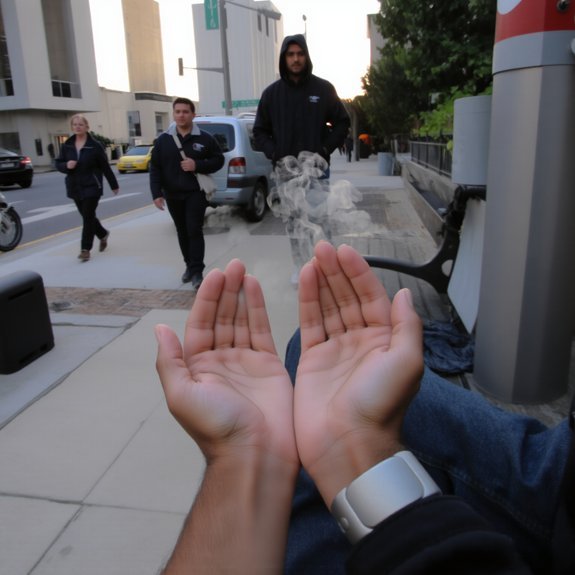
Anyone can steal a minute for breath, and I’m here to prove it won’t be weird. You sit, shoulders soft, eyes open or closed, and count inhales like a secret — one, two, three — then let the exhale be longer, like sighing out a small victory. You’ll practice breath awareness, noticing cool air at your nose, warmth in your chest, the tiny hitch of thought. I tell you to press pause between tasks, that’ll be your mindful shifts cue: finish an email, breathe, then move on. Try box breathing on the subway, lengthen exhales at red lights, or do a three-count belly breath before a meeting. It’s private, fast, oddly satisfying, and totally doable.
Two-Minute Mindfulness Routines for the Workday

If you’ve got two minutes between calendar alerts, you’ve got time to reset—really. I want you to sit, feel the chair under you, plant your feet. Close your eyes if you can, or soften your gaze. Take three slow breaths, counting to four in, hold one, two out. That’s a quick mindful check in, plain and useful. Next, scan your body, notice tight shoulders, unclench your jaw, let sound come and go. Then try a gratitude pause: name one tiny good thing, the warm mug, a helpful coworker, the sunlight on your desk. Say it out loud if you want, smile. Two minutes, and you’re clearer, calmer, oddly heroic. Now return, slightly lighter.
Turning Daily Tasks Into Mini Mindfulness Exercises
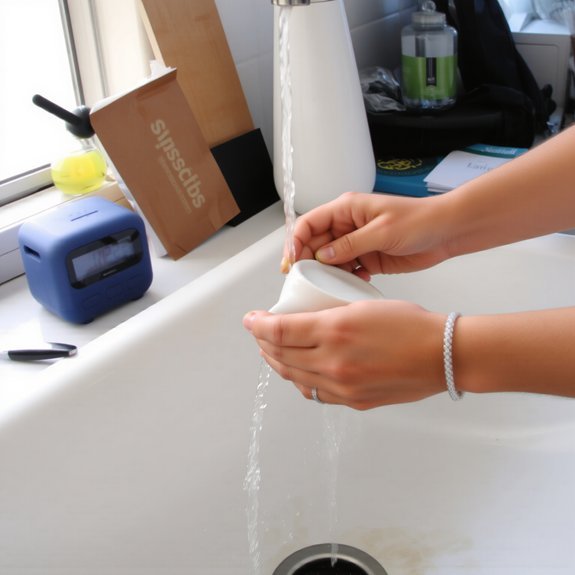
When I’m washing dishes, I don’t wash them—I tune them like a tiny orchestra. You can do mindful dishwashing too, feel suds warm, hear plates sing, breathe slow. Try attentive walking: notice shoe thuds, air on your face, a rhythm that steadies you. On focused commuting, let the seat hum and your breath be an anchor, no phone tugging. Make conscious eating vivid, chew textures, name flavors, savor one forkful longer. Present brushing becomes a five-count scalp massage, mint sharp, bristles whispering. Intentional showering is steam, skin, a timed minute of gratitude. Practice aware organizing by touching each object, deciding gently. Reflective gardening grounds you—soil scent, worm wiggles, small, steady joy.
Using Transitions to Reset and Recenter
You’re switching tabs, stashing a coffee mug, or signing off a call — pause for three slow breaths, feel the shoulders drop, notice the taste of coffee left on your tongue. I’ll bet you think that’s hardly heroic, but this tiny ritual clears the slate, like wiping fog from a bathroom mirror. Try it once, I promise you’ll notice the room smell fresher, your head less noisy, and you’ll actually enjoy the next thing you do.
Pause Between Tasks
Because shifts are tiny, magical dead zones, I treat them like secret breath breaks — quick, deliberate, and oddly luxurious. You stand, set down a pen, or close a tab, and that half-second becomes a tiny ceremony. Use task changes as gates: notice the weight of your shoulders, the sound of the heater, the taste of coffee left on your tongue. Say aloud, “Done,” or whisper, “Reset,” like a tiny spell. Those mindful moments stitch your day into readable paragraphs, not a blur. Tilt your face to the window, inhale cool air, stretch a shoulder, flex fingers. It’s simple, surprisingly satisfying, and feels like stealing a tiny, legitimate luxury — your day thanks you, even if you don’t.
Short Breathing Ritual
If a single breath could act like a friendly nudge, I’d call it the easiest life hack you’ll actually remember, so here’s one: steal thirty seconds between things. You stand, set shoulders, drop your phone, and close your eyes for a beat. Inhale for four, feel air cool your nose, exhale for six, notice warmth leave your chest. This tiny ritual trains breathing awareness, it makes shifts crisp, like a camera cut in a noisy movie. I say it’s sacred but goofy—your mini-ceremony, with ritual significance without the incense. Try a soft hum on the out-breath, or count colors on the ceiling. You reset, you recenter, you get back to work fresher, and yes, slightly smug.
Micro-Meditations for High-Stress Moments
You’re in the middle of a chaos storm, so let’s steal sixty seconds for a one-minute breathing reset—inhale four, hold two, exhale six—and feel your shoulders unclench like a stubborn jaw finally letting go. If your head’s racing, try sensory grounding: name three things you can see, two you can touch, one you can taste, and watch the room pull itself back into focus, like a messy photo snapping into place. Or stand up, roll your neck, sway your hips for thirty seconds—mini mindful movement that says, “Not today, stress,” with the elegance of someone who almost always trips over their own feet.
One-Minute Breathing Resets
When your inbox screams and your shoulders climb up to your ears, I want you to try a one-minute breathing reset—right where you are, no yoga pants required. I say this because tiny, mindful pauses cut chaos in half, and breath awareness is the simplest tool you own. Sit or stand, drop your jaw a notch, close your eyes if you can, and inhale for four—hold for two—exhale for six. Feel air cool at your nose, warm at your lips, shoulders melting like butter. Count silently, don’t judge. If a thought barges in, thank it, then return. One minute changes posture, tone, and choices. It’s embarrassing how effective it is, but hey, we all need cheats like this. Try it now.
Sensory Grounding Techniques
Though it sounds fancy, sensory grounding is basically your brain’s emergency reset button, and I’ll show you how to press it without rubbing your temples like a confused wizard. You stop, inhale, and tune into nature sounds nearby — birds, traffic as a distant drum, leaves whispering — they anchor you. Next, do a texture focus: press your fingers into a chair, feel the weave, count the bumps. Try scent awareness: cup your hands, breathe a scent — coffee, soap, rain — let it label you calm. For taste mindfulness, pop a mint or sip water, note sweetness, cool, surprise. Finish with color observation: name three colors in your view, loud in your head, and feel the room settle. Quick, doable, oddly effective.
Mini Mindful Movement
If you liked the sensory grounding tricks — that little brain reboot — you’ll love Mini Mindful Movement, because sometimes your body wants to lead the calm. You can do tiny micro-meditations anywhere, even at your desk, and they work fast. Try mindful stretching between emails, notice breath and tension, let shoulders drop. Body awareness turns fidgety panic into curious observation. I promise, it’s not woo—it’s practical.
- Roll your shoulders slowly, feel the joints, release a surprised sigh.
- Sit-to-stand with slow intent, notice toes, calves, the chair’s farewell.
- Neck circles, gentle, like tuning a radio for clarity.
- Finger taps on the desk, follow the rhythm, breathe with each tap.
- Heel lifts under the table, press, hold, release, feel steadier, smile.
Simple Sensory Grounding Techniques
Think of grounding as a tiny emergency kit you carry in your pocket—no bandages, just senses. I tell you to breathe, but not the boring kind—slow, chest soft, belly filling, and count to four. Touch the chair, press your feet into the floor, notice texture, temperature, weight. Try scent awareness: cup a cup of coffee or sniff a hand lotion, name the smell, anchor to the moment. Do sound observation next: listen for three things, near and far, hum of fridge, distant chatter, birds—label them. Open your eyes, scan colors, find one vivid detail. Say, out loud or in your head, “Here, now.” You’ll feel steadier, like a phone regaining signal. Simple, fast, oddly heroic.
Building Tiny Habits to Make Mindfulness Automatic
Once you start small, your brain gets tricked into thinking mindfulness is just part of the furniture—so let’s rig the furniture in your favor. You’ll stack tiny cues into your day, then watch them snowball. I promise, it’s less heroic than a meditation retreat, more like sneaking spinach into a smoothie. Try pairing mindful eating with a single breath before each bite, or three lines of gratitude journaling at night, and you’ll build momentum without drama.
Start tiny: stack little mindfulness cues—breath before bites, three gratitudes—so practice sneaks into your day.
- Put a sticky note on your coffee mug, inhale deeply, sip slowly.
- Swap scrolling for one minute of breath work by the door.
- Chew with your non-dominant hand, notice texture.
- Write three small gratitudes before sleep.
- Pause at red lights, count five slow breaths.
Conclusion
You’ll claim you’re too busy, then steal three slow breaths at the coffee machine, and come back convinced you’ve done a full retreat. I do it, you do it — we pretend zen is a long hike, when really it’s a red light, a chewing breath, a two-minute reset. Smile at the small wins, notice your feet on the floor, savor the warmth of your mug, and keep collecting these tiny, ridiculous victories. They add up, promise.