
Most students don’t know that your future job often starts with a coffee cup and a name tag, not a perfect résumé. I’m telling you this because you can start collecting those tiny wins now: snag a professor’s office hour, slide into an alumni DM with a quick question, show up to a campus mixer and actually talk to someone—yes, even the awkward colleague with the loud laugh. Do one small brave thing this week and you’ll surprise yourself; then we’ll talk next steps.
Key Takeaways
- Start early: attend events, office hours, and club meetings to meet peers, professors, and professionals before graduation.
- Reach out with purpose: email alumni or professors stating who you are, why you’re contacting them, and one clear ask.
- Build an online presence: optimize LinkedIn, post updates on projects, and engage thoughtfully with industry content.
- Practice reciprocity: offer help, share useful articles, or connect contacts to give value before asking for favors.
- Follow up and track contacts: send thank-you notes, schedule brief check-ins, and maintain a simple contact log.
Why Start Building Your Network Now
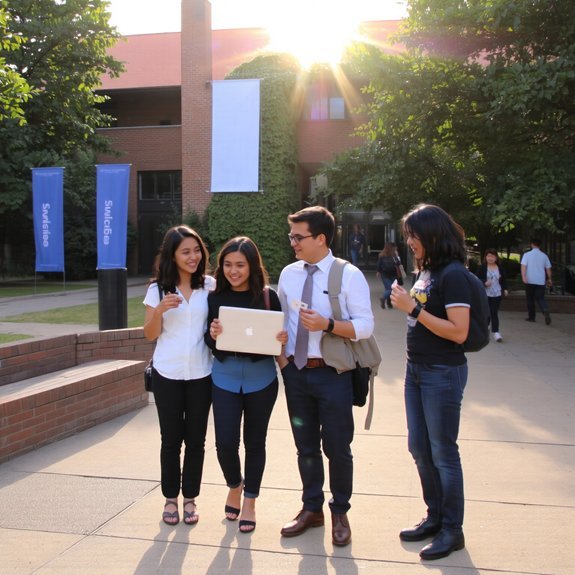
Because tomorrow’s jobs don’t hand out business cards at graduation, you’ve got to start now if you want a seat at the table — and yes, I know that sounds dramatic, but hear me out. You stumble into fairs, clubs, coffee lines, and suddenly there’s opportunity; smell the coffee, feel the handshake. I’ll tell you straight: early connections turn cold leads into invites. You’ll practice small talk, learn jargon, spot real mentors versus LinkedIn voyeurs. Go to events, ask one memorable question, follow up with a brief note — that’s it. You’ll collect stories for interviews, internships, and the occasional job offer. It’s less about magic, more about showing up, being curious, and keeping your calendar open.
Leveraging Professors and Academic Mentors

You’ll stand out if you email with a clear purpose—say who you are, what you need, and a simple next step, no rambling. Swing by office hours with a notebook and one bold question, listen, and let the conversation turn into a mini-mentorship; I promise professors notice persistence. If you want hands-on experience, ask about research roles or lab tasks, even if you feel awkward—awkward beats regret.
Email With Clear Purpose
When you email a professor, treat it like walking into their office—confident, tidy, and with a single ask in your hand; cluttered requests get glanced at, then ignored. I imagine you pause, breathe, type. Start with a clear subject: “Research help — two quick questions.” Lead with purpose in the first line, say who you are, the class, and why this matters, fast. Ask one thing, state a deadline, offer times or options. Use short paragraphs, bullets, bold maybe—well, not bold in email, but you get me. Close with gratitude and a simple signature: name, major, phone. I promise, a neat, polite, purposeful note gets replies. Be human, be brief, be brave.
Attend Office Hours
You’ve sent that tidy, purposeful email, and now it’s time to show up—literally. Walk into office hours like you mean it, with a notebook, a question, and maybe a guilty coffee stain; professors notice intent. Sit near the door if you’re nervous, lean forward, make eye contact, breathe. Start with a quick reminder of who you are, remind them of the email, then ask something specific—clarify a concept, get feedback on a draft, discuss career paths without begging. Listen more than you talk, jot the useful lines they say, and toss in a sincere thank-you. Leave with an action item, a next meeting, or a referral. That small, regular presence builds rapport, trust, and real mentorship.
Ask for Research Roles
Ask for a research role like you mean it—open the door, introduce yourself, and don’t apologize for wanting in. I tell professors I’m curious, I’m ready, and I’ll fetch coffee if that’s the job’s start. Say what you want, quickly, with concrete examples: class project, specific paper, or lab technique you’ve tried. Show up with a one-page note, like a tiny résumé, not a manifesto.
- Explain one clear skill you bring, and a short example of it.
- Propose a focused task you can do in weeks, not years.
- Offer regular check-ins, and say how you’ll report progress.
Be human, direct, slightly hungry. Professors notice confidence, not humility theater.
Connecting With Alumni Effectively

You’ve already got something in common—same school, same coffee shops, maybe the same terrible freshman orientation playlist—so start there, mention a shared class or professor and watch the ice melt. Be clear about why you’re reaching out, offer a specific, easy-to-say way you can help them (share a useful article, volunteer at their event, or bring them a coffee), and don’t send vague “can we chat?” messages. I’ll bet a polite, confident note with a concrete ask wins more doors than a long, gushy life story, so keep it short, personal, and helpful.
Start With Shared Backgrounds
Since we already share a hallway, a mascot, or that awful cafeteria lasagna, starting with alumni who walked your exact same path makes cold outreach way less awkward. You lean on the familiar, mention a professor, a dorm, a club. You smell old textbooks, hear late-night printer whirs, and you open with that shared moment — instant rapport. Don’t overthink it, be specific, be human.
- Mention a class, professor, or campus tradition that ties you together, briefly and honestly.
- Note a timeline overlap, a shared job on campus, or a mutual club memory, then ask one clear question.
- Use a short, friendly subject line, reference the shared detail in the first sentence, and close with gratitude.
Offer Clear Value
Okay, you’ve got rapport — that nostalgic hook about the quad or the terrible pizza. Now don’t ghost them; offer clear value. Tell them what you can do, not just what you want. Say, “I can help with social posts,” or “I’ll summarize industry reports weekly,” sound useful, not needy. Mention concrete times, deliverables, skills — proof beats praise. Bring a quick sample: a mock post, a one-page digest, a mini-research note, something they can scan in thirty seconds. Ask for five minutes, then deliver more. Be polite, confident, and a little cheeky: “If this saves you time, coffee’s on me.” That tiny gesture turns a warm chat into a practical connection, and that’s networking with teeth.
Making the Most of Career Fairs and Campus Events
Three quick rules before we plunge into it: show up early, smile like you mean it, and bring more than one copy of your résumé. You’ll hear noise, coffee steam, nervous laughter — breathe, tighten your shoulders, and walk the room like you own the moment, even if you don’t. I promise awkward small talk won’t bite.
- Scan booths fast, pick three must-talk-to recruiters, and return for deeper chats.
- Ask one sharp question, listen, then relate it to a specific class project or club win.
- Close every convo with a clear next step: Linked contact, follow-up email time, or a prompt for coffee.
Keep energy high, notes ready, and your thank-you line practiced — “Loved our chat, here’s one thing I can do next.”
Using LinkedIn and Other Professional Platforms
Think of your LinkedIn profile like a bright, tidy dorm room—clean photo, clear headline, and a summary that smells faintly of ambition. I’ll show you how to polish every shelf, add concrete projects, and tweak keywords so recruiters actually knock; then you’ll scroll, comment, and share smartly, not awkwardly. Say something useful, crack a small joke, and watch connections turn into conversations.
Optimize Your Profile
If you want people to take you seriously, start by looking like someone worth talking to — I learned that the hard way after sending messages from a profile photo of me squinting in sunlight, half-eaten sandwich in hand. Clean headshot, tweak your headline, and tell a quick story in your summary. You want folks to nod, not click away.
- Update your photo: clear face, friendly expression, plain background, avoid sunglasses or snacks.
- Craft a headline: role + skills + ambition, like “Student Developer | Python, UX | Building accessible apps.”
- Write a concise about: one opening line that hooks, two sentences of achievements, one line about what you want next.
Polish, then proof. You’re signaling competence before you even speak.
Engage With Content
You’ve cleaned up your photo and tightened your headline — nice work, you’re not the person with the sandwich anymore — now start showing up where people actually hang out online. I’ll say it straight: scroll less, engage more. Like, comment, share with a note, ask one smart question, and tag someone who’d laugh — don’t lurk. On LinkedIn, join groups, follow company pages, and react within the first hour of a post for visibility. On niche platforms, post short takes, screenshots of projects, or a two-sentence lesson learned. Use voice notes sometimes, they feel human. Reply to every thoughtful comment, even with a GIF, and thank people. This is how small interactions become real connections, and yes, it’s fun when you stop being shy.
Joining Student Organizations and Clubs
When I wandered into my first club meeting, the room smelled like stale coffee and fresh name-tags, and I felt both ridiculous and oddly excited; join one and that mix is your new normal. You’ll show up awkward, stay for the snacks, and leave with a LinkedIn connection and a funny anecdote. Say yes to low-risk roles, volunteer for small tasks, and watch trust grow. Bring a notebook, ask one sharp question, introduce yourself—don’t overthink it.
- Attend three meetings, then pick one role that forces you to speak.
- Swap contact info immediately, follow up with a short, friendly message.
- Help organize an event; you’ll meet people fast, and learn by doing.
Clubs are practice, not perfection.
Finding and Working With Mentors
Mentor hunting feels a little like thrift-store shopping: you poke through racks, hold up a few odd pieces to the light, and hope one fits—except here the prize can change your career. Walk into events, scan name tags, listen—really listen—then approach like you’d borrow sugar: polite, specific, brief. Say, “I admired your talk on X, could I ask one question?” Offer your calendar, not excuses. When someone says yes, show up, bring notes, follow up with a short thank-you, and act on one suggestion fast. Rotate mentors: advisors, alumni, a tough professor. Give value too—share an article, connect them to someone useful, bring coffee. Keep boundaries, set goals, check in quarterly. Good mentors push you, laugh with you, and make your path clearer.
Networking Through Internships and Part-Time Work
Immerse yourself in your internship like it’s a house party with name tags—move around, eavesdrop a bit, then latch onto people who look interesting. I mean it: introduce yourself, offer to grab coffee, help carry a box, ask about that weird poster on their wall. You’ll learn jargon, rhythms, and who actually fixes the printer. Smile, listen hard, take notes, follow up the next day with a quick thank-you and one useful thought.
Treat your internship like a nametag party: circulate, listen, help out, ask questions, then follow up with gratitude.
- Ask to shadow someone for an hour, watch tools, ask two smart questions.
- Volunteer for small tasks that stretch you, finish them early, share credit.
- Keep a contact doc, note quirks, send updates twice a month.
Crafting a Low-Pressure Outreach Message
Curious how to slide into someone’s inbox without sounding like a needy telemarketer? Envision this: you, coffee-scented notebook open, typing a one-paragraph note that feels human. Start with a brief hello, mention a specific detail — their talk, article, or alma mater — then state why you’re reaching out, one clear ask, thirty seconds tops. Be honest, be short, and add a tiny compliment that’s genuine, not syrupy. Offer something low-effort: a quick question, a coffee chat, a link you think they’d like. Close with gratitude and an easy opt-out line, like “No worries if busy.” Keep your tone light, avoid jargon, and read it aloud — if it sounds like you, hit send.
Maintaining and Growing Professional Relationships
Once you’ve made that friendly intro, don’t let the connection go stale — treat it like a small, thriving houseplant you actually remember to water. You check in, not to pester, but to show you’re present: a quick note after a talk, a congratulatory emoji on a job update, a photo of the messy lab you promised to clean. I say something short, charming, and useful. You’ll find momentum if you add value, listen more than you talk, and follow through.
- Send timely, specific follow-ups — mention a detail, suggest a resource, invite coffee.
- Offer help first — share introductions, volunteer for projects, bring snacks.
- Schedule light touchpoints — birthday notes, quarterly updates, article shares.
Conclusion
Think of your network like a living garden: plant seeds now, water them with quick check-ins, and pull a few weeds (awkward silences) with a joke. I’ll nudge you—chat up a professor, DM an alum, shake hands at career day—do one thing today. You’ll smell the progress, see new shoots in internships and LinkedIn messages, and laugh at your awkward first email. Keep tending it, and it’ll feed your future.