
You’re on campus, map in your hand, winter breeze nipping at your ears, and the quad’s buzzing—clubs, tables, free food (always free food). I’ll tell you how to cut through the noise: talk to people, watch a meeting, ask blunt questions, and don’t apologize for trying stuff. You’ll find the hype, the quiet ones, and the groups that feel like home—keep walking toward the table that makes your chest lift, and then…
Key Takeaways
- Attend the Campus Involvement Fair to meet clubs, collect contact info, and pick up promotional materials.
- Check the Student Affairs Office and departmental bulletin boards for meeting times, club directories, and recognition rules.
- Prepare a short introduction, bring a pen and charger, and verify event details before attending your first meeting.
- Follow up within a week with contacts, sign up for roles, and volunteer for small tasks to build presence.
- If starting a group, define a mission, secure a faculty advisor, complete recognition paperwork, and plan a launch meeting.
Why Student Organizations Matter at HBCUs

Because college is as much about finding your people as it is about getting a degree, you’ll want to plug into student organizations early — trust me, they’re the secret sauce. You’ll find mentors who actually care, friends who text you back, and events that smell like popcorn and possibility. Join a study group, roll up your sleeves at a service project, or belt karaoke at midnight — do the things that make campus feel like home. You’ll build leadership muscles, polish your résumé with real wins, and learn cultural traditions that textbooks skip. I’ll poke fun at your first awkward meeting, but you’ll leave it with a name tag and a sense of belonging. That, right there, changes everything.
Where to Find Campus Clubs and Groups

You’ll spot most student groups at the Campus Involvement Fair, where tables, flyers, and free T‑shirts make the quad smell like sunscreen and possibility. Swing by the Student Affairs Office next—ask loud, take notes, and pretend you’re collecting evidence for a very fun case. Don’t miss departmental bulletin boards, they’re low‑key treasure maps pinned with meetings, office hours, and the occasional baking club flyer that’ll make you wish you’d come sooner.
Campus Involvement Fair
Most HBCU campuses throw a huge, colorful involvement fair at the start of the semester, and I’m telling you, it’s like speed-dating for your future self — noisy tables, flyers fluttering, free pens that somehow multiply in your backpack. You’ll wander aisles, smell popcorn and printer ink, hear laughter and bass from the DJ. Stop at a table, ask one sharp question, watch faces light up. Get a sticker, try a handshake, promise to attend a meeting — then actually show up once, at least. Snap pics for your dorm group chat, collect cards, toss the weird brochure later. If you’re shy, bring a friend, or pretend you need directions. You’ll leave lighter, louder, and choosing easier than you feared.
Student Affairs Office
If the fair felt like speed-dating, the Student Affairs Office is your after-party — calmer, air-conditioned, and staffed by humans who actually know where the cake went. I tell you, wander in, breathe deep, and let the receptionist point you to maps, club directories, and that one organizer who’s always caffeinated. You’ll hold glossy flyers, hear names you want to try on, and feel the hum of campus life through glass doors. Ask for meetings, drop-in hours, or email lists; they’ll give you contact cards and a calendar invite if you ask nicely. I’ll admit, it’s less glamorous than social media, but here you find reliable info, actual people, and follow-up — the kind that turns curiosity into membership.
Departmental Bulletin Boards
Three rows of cork, thumbtacks like confetti, and a rumor of free pizza — that’s your departmental bulletin board to sum up. Walk down the hall, breathe in coffee and paper glue, scan flyers with bold fonts and crooked stapling. You’ll spot study-group times, printmaking meetups, and the chess club’s quirky mascot drawing. Peel back a sticky note, scribble your name, snap a photo for later. Ask the professor nearby, they’ll smirk and say, “Oh, that one? Great people.” Follow the trail of handbills to a classroom or lounge, introduce yourself, shake hands, laugh at your own awkwardness. You’ll leave with a signup link, maybe a sticker, and a plan — small, real, ready to grow.
How to Prepare for Interest Meetings and Events
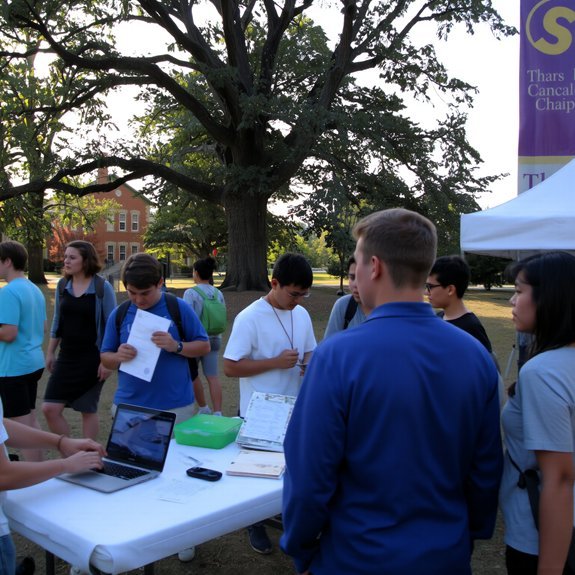
One quick trick before you walk into that interest meeting: breathe, straighten your shirt, and pretend you’ve been showing up to campus events your whole life — even if your last campus outing was ordering pizza at orientation. I tell you this because confidence is a costume you can borrow. Check the event time, map the building, charge your phone, and grab a pen. Smell the coffee, listen for laughter, and scan the room for someone who looks friendly — yes, that person probably needs a friend too. Have a one-liner ready: “Hi, I’m [Name], I’m curious about what you do.” Ask about meeting frequency, costs, and time commitment. Leave with a plan, not a promise, and follow up the next day.
Strategies for Joining Greek Life and Sororities/Fraternities
You’ll want to learn each chapter’s recruitment steps, so you don’t show up looking confused — trust me, been there, wore the wrong shoes. Start by listening, asking smart questions, and showing up consistently, because genuine connections beat a rehearsed speech every time. I’ll walk you through where to stand, what to say, and how to leave an impression that’s real, not scripted.
Understanding Recruitment Processes
If you’ve ever watched a campus crowd part like the Red Sea when someone shouts “rush,” don’t worry — I was the awkward wallflower in the back too, clutching a paper cup like it was a life preserver. You’ll learn the beats: info sessions, meet-and-greets, formal recruitment, and voting rounds. Pay attention, show up, breathe. Ask clear questions about expectations, dues, and time commitment. Take notes, trade a laugh, follow up.
- Go to info nights early, grab a name, and remember one quirky fact.
- Dress smart, comfortably, and in layers — you’ll sweat from nerves, then cool down.
- Track deadlines, RSVP, and thank people; manners count, always.
Building Genuine Connections
When I first stepped into a sorority mixer, my palms felt like I’d been holding a bag of marbles, but I promised myself I’d do more than smile awkwardly and cling to the snack table; so I learned to listen like it mattered, ask one sharp question, and leave with three names and one goofy fact to use later. You’ll try the same: show up, breathe, and trade surface small talk for one honest line — “What made you join?” Watch faces change, answers bloom. Offer specifics about yourself, a quick story, not rehearsed, just true. Remember names, notice details — a laugh, a pin, the playlist song. Follow up within 48 hours, reference that goofy fact, invite coffee. Be curious, consistent, kind.
Navigating Auditions and Tryouts for Performing Arts Groups
How do you walk into a buzzing rehearsal room without tripping over jazz hands or your own nerves? You take a breath, square your shoulders, and remind yourself you belong here. I’ll say it plain: auditions are a hair-raising, thrilling mess, and you’ll survive.
- Warm up like you mean it — hum, stretch, shake out the jitters.
- Listen first, then show off — match the room’s energy, then add your spark.
- Ask quick questions — they’ll respect curiosity more than fake confidence.
You’ll hear claps, squeaky floorboards, someone cracking a joke. You’ll mess up a line, laugh, keep going. Spotlight’s not a trap, it’s a promise. Leave proud, whether you nailed it or learned something priceless.
Steps to Start Your Own Student Organization
You just left a sweaty rehearsal room, heart still thumping from that near-miss line, and you’re thinking: I could run this chaos better. Good. Start by naming your group—make it snappy, make it clear. Draft a short mission, two to three sentences, so folks know why they’d show up. Find a faculty advisor who’ll vouch for you, someone patient and caffeinated. Check student affairs for recognition rules, paperwork, deadlines—don’t wing it. Plan a launch meeting: date, simple agenda, snacks, sign-up sheet. Recruit officers, set basic bylaws about roles and meetings, keep it flexible. Budget a rough calendar and funding ask. Advertise with flyers, socials, and quick pitches between classes. Celebrate the first imperfect meeting; you’ve begun.
Balancing Club Commitments With Academics
Because your syllabus doesn’t care about your passion, plan like a quarterback calling plays—quick, precise, and with snacks nearby; I’ve learned that balancing meetings and midterms is part choreography, part triage. You’ll map deadlines on a wall calendar, smell marker ink, feel the paper curl, and promise to stop overcommitting (then say yes anyway). I keep rules that actually work, not lofty vows.
- Say no without guilt, prioritize classes first, clubs second.
- Block study times, set alarms, bring earbuds and emergency granola.
- Delegate tasks, recruit a reliable teammate, trade favors.
I coach myself like a friend who nags but cares, I nap like it’s practice, and I celebrate small wins with loud, tiny dances.
Leadership Opportunities and Professional Development
Okay, so you’ve learned to treat your schedule like a playbook and stop signing up for everything (mostly). Now, lean in: step for step, you can claim leadership that actually helps your future. Start small — run a table, then chair a meeting, then pitch an event; you’ll feel the adrenaline and hear people actually listen. Say yes to mentor roles; you’ll learn to give feedback without sounding like a robot. Seek workshops on résumés and mock interviews, bring a recorder, take notes, repeat. Ask faculty for short shadow days. Volunteer for roles that force you to plan budgets, negotiate with vendors, and speak into mics — awkward, but invaluable. Keep a portfolio of wins, even the messy ones; they tell better stories than perfection.
Making the Most of Membership and Building Lasting Networks
When you stick around after the meeting — not just for the free pizza, though that helps — you start to collect the little moments that turn acquaintances into allies; I’m talking handshakes that become check-ins, hallway jokes that turn into study sessions, and awkwardly honest conversations that lead to real help. You show up, you listen, you joke — and people remember that. Push for small roles, ask for feedback, bring snacks once in a while; you’ll be surprised how food and reliability open doors. I can’t promise instant fame, but I can promise steady returns.
- Volunteer consistently, even for small tasks.
- Connect one-on-one after events, ask about goals.
- Keep a contacts note, follow up within a week.
Conclusion
You’ll find your people if you try, I promise—campus fairs buzz with laughter, flyers stick to your fingers, and someone will hand you a contact card while you’re juggling coffee. Test the theory that belonging is earned, not given: show up, ask questions, mess up a little, laugh about it. I did; you will, too. Stay curious, keep your schedule tight, say yes more than you’re comfortable with, then choose wisely.