Tag: time management

  • How Do I Meal Prep for the New Year

    How Do I Meal Prep for the New Year

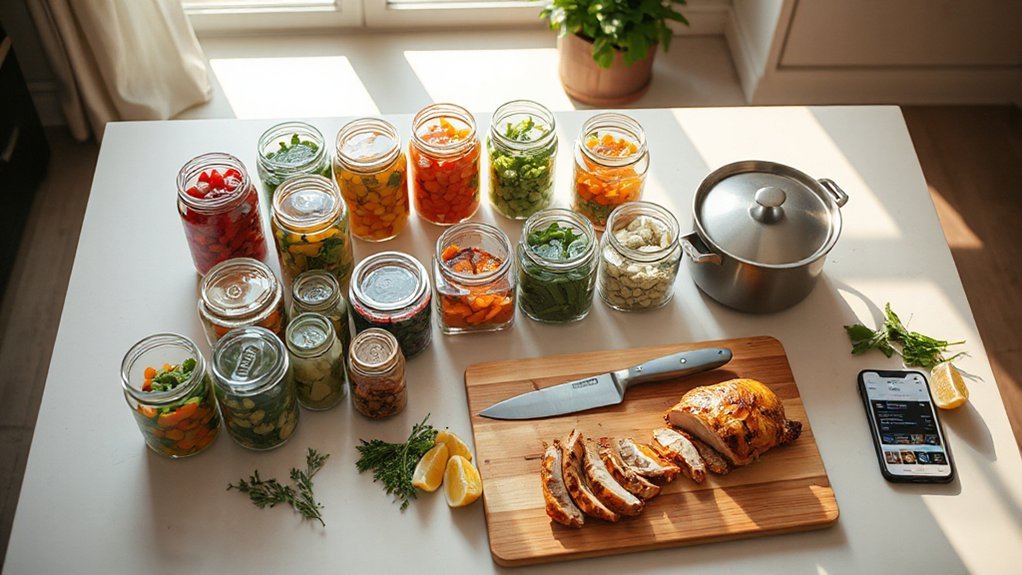
    You think meal prepping is too rigid or time-consuming—it’s not, I promise; you can start small and still eat like a boss. Picture a row of glass containers, steam rising as you tuck roasted veggies beside lemony chicken, the fridge humming like a tiny, obedient orchestra—easy lunches waiting. I’ll show you a simple, flexible plan that fits your week, saves money, and actually tastes good, so keep going and I’ll walk you through the smart steps.

    Key Takeaways

    • Start small: pick one protein, two vegetables, and one sauce to prep for 3–5 days to build consistency.
    • Choose a realistic schedule (weekly batch cook or daily assembly) that fits your lifestyle to avoid burnout.
    • Plan balanced meals with macronutrient targets and simple swaps to maintain variety and nutrition.
    • Shop smart: make a pantry-focused list, buy versatile ingredients, and resist impulse purchases.
    • Store safely: use shallow labeled containers, cool before sealing, and reheat thoroughly for freshness.

    Set Realistic Meal Prep Goals for the Year
    realistic meal prep goals

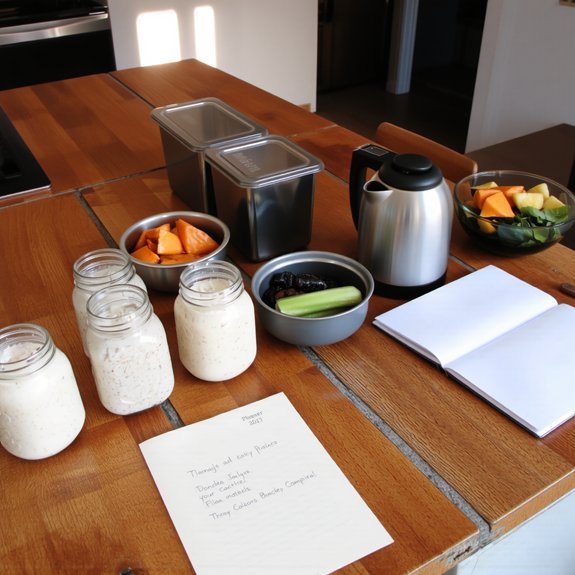
    If you want meal prep to stick this year, start small and stop pretending you’ll become a freezer-batch superhero overnight. You and I both know enthusiasm fades, so set realistic expectations: one protein, two veges, a sauce you actually like. I’ll cheer when you hit achievable milestones, like prepping lunches for three days, then five. Picture the crisp sound of lids snapping shut, the steam rising from a warm soup on Sunday, the fridge smelling faintly of garlic — satisfying. Say out loud, “I’ll try one shopping list, one cooking session.” You’ll feel less dread, more control. Celebrate tiny wins, high-five the empty sink, laugh at the browned edges, and plan the next small, doable step.

    Choose a Prep Schedule That Fits Your Week

    choose a cooking rhythm

    You’ll want to pick a rhythm that actually fits your life, not one you feel guilty about skipping. Some people batch-cook on Sunday, others chop and assemble every night, so try weekly vs. daily prep and see which saves time and sanity — I usually time-block an hour on Sundays, headphones in, oven humming, coffee gone cold. If that’s too dreamy, break it into 15–30 minute sessions through the week, you’ll still win dinner without turning your kitchen into a disaster movie.

    Weekly vs. Daily Prep

    While some folks swear by a Sunday marathon of chopping and roasting, I prefer a system that actually fits my week — not one that makes my fridge look like a meal-prep shrine to regret. You’ll choose between weekly efficiency and daily convenience, and both have smells, sounds, and little wins. Weekly saves time later, you get roasted vegetables that sing, sauces that deepen overnight. Daily prep feels fresh, like morning coffee and warm toast, you toss together salads, heat proteins, plate with flair.

    • A stack of glass containers, steam rising when you open one
    • A cutting board scattered with citrus, herbs, and stubborn onion layers
    • A skillet sizzling, garlic perfume filling the kitchen

    Pick what makes you actually eat the food.

    Time-blocking Your Sessions

    You’ve picked whether you’re a Sunday-roast champion or a five-night freestyle chef, so now let’s map that energy onto a prep schedule that actually fits your life. I want you to treat meal prep like a series of short, labeled appointments. Block one long session for roasting and sauce-making, or split into three 40-minute bursts for chopping, cooking, and packing. Use a timer, because nothing humbles you like a burnt pepper. This is practical time management, not a hobby. Write down session planning notes: what’s urgent, what’s freezer-worthy, what’s a weekday rescue. Picture the sizzling pan, the citrus zing, the stack of labeled containers cooling on the counter. You’ll stay sane, save cash, and eat better — without turning your kitchen into a disaster zone.

    Build a Flexible, Balanced Meal Plan
    flexible balanced meal planning

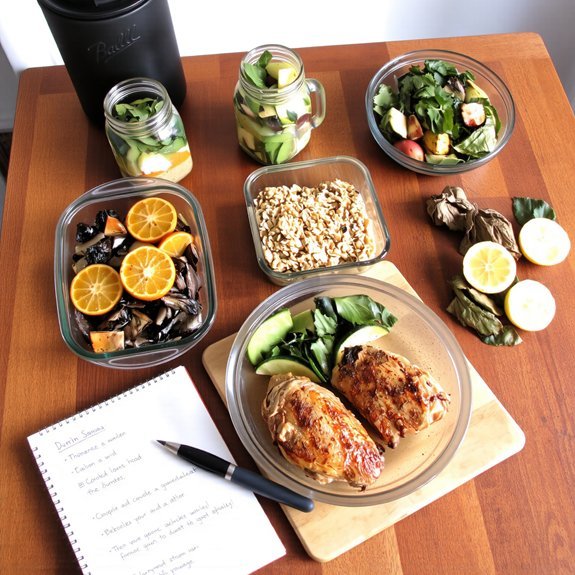
    You’ll want targets for carbs, protein, and fat that keep you full and energetic, not chasing spreadsheets while the fridge mocks you. I’ll show swaps—chicken for tofu, quinoa for rice—so your meals stay interesting, colorful, and actually tasty when reheated. Roll with the plan, tweak it like a chef with a sense of humor, and you’ll eat better without turning cooking into a circus.

    Macronutrient Targets

    If you want your meals to feel like teamwork instead of a nutritional mystery, start with macronutrient targets—those are the carbs, proteins, and fats that do the heavy lifting for energy, muscle, and satiety. You’ll pick protein sources that satisfy, carb choices that fuel, and fat ratios that keep you full; I’ll show you how to balance them for meal diversity and fit dietary preferences. Use portion control, and practice nutrient timing so snacks and meals play nice. Track progress weekly, don’t panic when numbers wobble.

    • Picture roasted salmon, quinoa, and steamed greens, steam rising, fork ready.
    • Imagine a bowl of oats, berries, nut butter, spoon clinking.
    • Visualize a tiled prep table, labeled containers, neat macronutrient stickers.

    Swap-Friendly Recipes

    When I say “swap-friendly,” I mean meals that bend like a good yoga class—sturdy, reliable, and forgiving when life throws you a leftover curry or a rogue sweet potato. I want you to build bowls and trays that laugh at last-minute changes. Roast a tray of seasoned veggies, cook a grain, toss a protein—then mix and match. Offer clear swap options: chickpeas for chicken, quinoa for rice, tahini for mayo. Teach yourself quick flavor substitutions so sauces and dressings rescue anything—acid, heat, salt, sweet. Smell the citrus, hear the sizzle, taste the comfort. I’ll coach you through swaps, and you’ll learn to improvise without panic. It’s practical, playful, and oddly empowering—yes, even on Tuesday.

    Master Smart Grocery Shopping and Pantry Staples

    Since I’m not a magician, I plan ahead: I stroll into the grocery store like a small, confident general, list in hand, nostrils filled with the sweet, fluorescent hum of produce and bakery, and I don’t leave until the pantry’s future is secure. You follow my lead, check your grocery list essentials, and buy smart: staples that stretch, season, and rescue dinners. You organize shelves by use, label jars, and stack cans so nothing hides in shame. You smell spices, squeeze avocados, and resist impulse snacks (mostly).

    • Row of glass jars, golden quinoa, and sunlit pasta ribbons.
    • Stacked cans, cheerful labels, a tinny chorus.
    • Mason jars of beans, earthy, waiting.

    Pantry organization saves you time and money, trust me.

    Batch-Cooking Techniques for Time Savings

    Because I don’t trust evenings to magic themselves into dinner, I batch-cook like I’m setting a tiny, edible army to work for me all week. You’ll grab a multi cooker, pull a sheet pan, and lean into one pot recipes that save time and dishes, while you sing off-key and feel very domestic. Use batch seasoning early, taste as you go, and layer flavor infusions—garlic, citrus, smoked paprika—so leftovers don’t sigh. Embrace cooking techniques that double duty: roast veggies for bowls, crisp proteins for tacos. Think ingredient versatility: beans become soups, salads, or mash. Mind portion control so servings are ready, not guesswork. When you freeze meals, freeze smart: label, stack, and reclaim your evenings with slightly smug joy.

    Safe Storing, Labeling, and Reheating Practices

    If you want your weeknight victories to taste as good on Thursday as they did on Monday, you’ve got to treat storage, labeling, and reheating like a kitchen ritual, not an afterthought. I’ll walk you through safe storage, effective labeling, and proper reheating, with food safety front and center. Use shallow containers, cool hot food before sealing, and stash meats lowest in the fridge—no mysteries, no spills. Label each box with contents and date, in bold, because you’ll forget. Reheat to steaming hot, stir midway, check center temperature, don’t cram the microwave. You’re not heroic for eating questionable leftovers; you’re clever when you plan.

    • A clear glass dish, steam fogging the lid.
    • A bold marker, bright tape around plastic.
    • A fork testing a bubbling stew center.

    Meal Prep Ideas for Different Diets and Budgets

    Want variety without chaos? I’ll walk you through meal prep ideas for different diets and budgets, so you won’t stare at takeout menus at midnight. Start with a plan: pick a protein, a grain, two veggies, spice it up. For keto, swap rice for cauliflower rice, drizzle butter, sear salmon till it sings. For vegetarian, roast chickpeas, toss with quinoa, add bright lemon, feta if you want joy. On a tight wallet, embrace budget friendly recipes: beans, frozen veg, bulk oats, slow-cooked stews that smell like victory. I give diet specific tips—portion sizes, easy swaps, simple seasonings. Prep in batches, label, chill, then reheat confidently; you’ll eat well, save money, and brag a little.

    Quick Breakfasts and Grab-and-Go Lunches

    When morning hits like a speeding train, you’ll thank me for the tiny revolutions we build before dawn—coffee already brewed, jars lined up like little soldiers, and a cramped Tupperware army ready to go. I show you fast breakfasts that actually taste like breakfast, not cardboard. Make overnight oats in mason jars, layer fruit, nuts, a drizzle of honey, shake, chill. Prep smoothie packs—frozen fruit, spinach, protein—so you blitz and bolt. Lunches? Think sturdy wraps, Mason jar salads, and egg muffins you can eat cold if life demands it.

    When mornings roar, tiny pre-dawn revolutions—brewed coffee, mason-jar oats, smoothie packs, Tupperware troops—save the day.

    • A row of glass jars, oats gleaming, berries popping like confetti
    • Smoothie packs, frosty and humming promise in the freezer
    • Tupperware stacked, a compact, delicious defense against hangry afternoons

    Tips to Prevent Burnout and Keep It Sustainable

    You’ve got the jars, the smoothie packs, the glorious Tupperware fortress—bravo, you superstar of mornings. Keep it fun, not frantic. Rotate seasonal ingredients for flavor and cost savings, add recipe inspiration notes on lids, and practice mindful eating so each bite actually lands. I recommend weekly mini-cooks, not marathon Sundays; short sessions protect cooking skills, and they save your soul. Use variety inclusion—different grains, proteins, colors—to avoid boredom. Tap community support: swap meals, trade tips, laugh about disasters. Build motivation strategies: calendar rewards, photos, tiny wins. Prioritize stress management and self care practices—walk, breathe, nap when needed. Make meal enjoyment the goal. Your fridge should cheer, not judge.

    Conclusion

    You’ve got this. Imagine opening your fridge and being greeted by cheerful mason jars, sizzling aromas already waiting, and lunch high-fiving your future self. Start small, cook smart, label like a pro, and celebrate tiny wins — I promise it’ll taste like victory. If you slip, shrug, reboot next batch, and keep going. You’ll save time, money, and calories, and feel ridiculously proud every single week. Welcome to your new, delicious routine.


  • How to Say No to Things That Don’t Serve You at an HBCU

    How to Say No to Things That Don’t Serve You at an HBCU

    Your schedule is a leaky faucet, dripping away your time, and you’re getting soaked—so let’s fix the pipes. I’m going to walk you through spotting what drains you, saying no without drama, and keeping friends who actually care, with quick lines you can use on the quad, at org meetings, or over pizza; you’ll learn to pause, breathe, decline, and offer something smaller that still works, and yes, you’ll feel weird at first—but that’s the point, because boundaries take practice and payoff.

    Key Takeaways

    • Know your priorities and limits by listing commitments and designating nonnegotiable study, sleep, and self-care times.
    • Use short, honest phrases like “I can’t swing that right now” or “I need to pass on this” to decline gracefully.
    • Offer a low-effort alternative (e.g., help another time, suggest someone else) without overcommitting yourself.
    • Stay calm and repeat your boundary if pressured, briefly explaining your reason without oversharing.
    • Decompress after saying no with a quick self-care ritual and celebrate that you protected your energy.

    Understanding Why Saying No Matters on Campus

    learn to say no

    Because campus life moves fast and people assume you’re always “in,” you’ve got to learn to press pause for yourself. I’ve stood in crowded dorm halls, smelled fried chicken from the quad, heard laughter like a dare, and still said no. You’ll protect study time, sleep, and your mood by saying no, not because you’re rude, but because you’re smart. Saying no keeps your schedule honest, your friendships real, and your energy intact. You’ll practice a clear, kind refusal, feel awkward, then relieved — like popping a pimple, oddly satisfying. You’ll learn to spot when guilt’s the salesman, and you’ll counter with calm truth. Trust me, people respect limits more than perpetual availability.

    Assessing Your Priorities and Limits

    assess priorities set limits

    Saying no felt good, didn’t it? You stand by the quad, sun warm on your shoulders, and you notice what drains you versus what fuels you. Make a list — quick, honest — classes, jobs, clubs, relationships. Hold each up like a dish to your nose: does this smell like growth or reheated stress? Count your hours, not just commitments, and mark the ones you actually enjoy. Set firm limits: study blocks, sleep times, rehearsal-free Sundays. Imagine two baskets — one for yes, one for no — and toss things in without guilt. Check in weekly, sip water, reassess. You’ll stumble, you’ll laugh at your past overcommitments, but each choice sharpens your focus, protects your energy, and nudges you toward what truly matters.

    Polite, Culture-Smart Ways to Decline Requests

    polite ways to decline

    A few tactful lines can keep you from feeling rude and from losing your spot in the campus circle — I’ll show you how. Picture standing under the magnolia, sunlight warm, friend asking another favor. You say, “I can’t swing that right now,” then offer a smaller help, “I can share notes or connect you with Sam.” Short, clear, kind. Use “I” statements, don’t apologize too much. Smile, nod, mean it. Drop a light joke—”My calendar’s haunted”—to ease the cut. If it’s cultural—family, church, legacy—acknowledge that: “I get why that matters, but I need to pass.” End with a firm follow-up, “I hope you find someone,” or “Maybe next month.” That keeps respect, keeps you sane, and keeps the crew intact.

    Managing Pushback and Preserving Relationships

    If someone pushes back when you say no, don’t freeze—lean in and stay steady, like you’re holding a soda on a crowded quad. I keep my shoulders low, my tone plain, and I name the reason, quick as snapping a cap. They test you, that’s normal. You pivot, offer a smaller yes, or stand firm with a smile. You don’t need to explain your whole life.

    • Use “I” statements, clear and calm.
    • Repeat your boundary, like a friendly echo.
    • Offer an alternative if you genuinely want to help.
    • Call out pressure kindly, “I feel rushed,” works wonders.
    • Walk away if it turns disrespectful, dignity intact.

    You’ll lose some approval, gain your focus, and sleep better.

    Practicing Self-Care After Setting Boundaries

    You just held your ground, felt the little tremor in your throat, and walked away with your dignity — good. Now breathe, sit down, and give your shoulders a minute; they’ve been hauling other people’s expectations all week. Make a tiny ritual: pour tea that smells like citrus, text your best friend a one-line victory — “I said no, survived” — and laugh at how melodramatic you are. Move your body, even if it’s just a two-minute march to the quad; sunlight scrapes stress off your skin. Say no again, to guilt, by writing a short list: food, sleep, one thing fun. If someone calls, let it go to voicemail. You’re not mean, you’re making space. Celebrate that.

    Conclusion

    You’re holding a quarter in a noisy quad — decide which vending machine deserves it. I’ve said no, felt guilty, then tasted relief like cold water after chapel. You’ll learn your limits, use sharp, kind phrases, and offer a smaller favor when you mean it. People respect clarity, even at 2 a.m. You won’t please everyone, but you’ll keep your spark. Say no, breathe deep, and watch your life rearrange itself for the better.

  • How to Manage Time as a Nontraditional HBCU Student

    How to Manage Time as a Nontraditional HBCU Student

    You’re juggling a night shift, two kids, and a bio lab on Thursdays—so you learn to color-code your week like it’s a life-or-death Ikea project. I’ll tell you how to carve study blocks into nap times, snag campus help without drama, and protect your one sacred evening off, but first you’ve got to admit which tiny habit is wrecking your schedule.

    Key Takeaways

    • List and rank all responsibilities by urgency and consequence to focus on what truly must get done each week.
    • Block real-life commitments (work, childcare, classes) into a weekly calendar before adding study blocks.
    • Reserve 30–90 minute focused study appointments, eliminate distractions, and treat them as non-negotiable.
    • Use campus resources (libraries, tutors, quiet rooms) mapped to upcoming deadlines for efficient support.
    • Protect energy: schedule short resets, set boundaries, and keep one weekly “rescue hour” for unexpected tasks.

    Understanding Your Responsibilities and Priorities

    prioritize responsibilities communicate limits

    If you’re juggling classes, a job, family, and maybe a midnight commute, you already know you don’t have time for vague goals — and good, because neither do I. You start by listing everything that pulls at you: lectures, shifts, kid drop-offs, bills, and that one professor who emails at 2 a.m. Say each responsibility aloud, feel the weight, then rank them by consequence — what breaks if skipped? Prioritize urgent, then important, then “nice to do.” Be honest: if you can’t study on Sundays, own it. Block chunks for real life, not fantasy. Communicate your limits with work and family, set alarms that sting, and keep a visible list, stained coffee ring and all. You’ll breathe easier, promise.

    Building a Realistic Weekly Schedule

    weekly schedule organization tips

    Okay, now we take that ranked list and pin it to a weekly map. You spread color across days, use a felt-tip mental highlighter, and slot in must-dos first: class times, work shifts, childcare. Then you tuck in fixed routines, like gym or prayer, around them, leaving breathing room between blocks so life doesn’t ambush you. You mark flexible tasks—errands, reading—on evenings with a lighter shade. I like to add tiny sensory cues: a coffee icon for morning focus, a bed for wind-down. Say aloud, “This is doable,” then test it for a few days. Adjust where you bounce off. Keep one rescue hour, weekly, for surprises. If it looks crowded, cut a low-priority task, not your sleep.

    Creating Focused Study Blocks That Fit Your Life

    focused study time management

    Because you’ve already mapped your week, you can carve out study time that actually fits your life instead of pretending your brain is a 24/7 library. You pick pockets of quiet, thirty to ninety minutes, when laundry’s not screaming and the kids are napping, and you treat them like appointments with a very picky boss. Close tabs you don’t need, set a timer, grab a drink that won’t spill drama, and do one focused task. I say “do one” because multitasking is a lie that wears comfy shoes. If focus fades, walk to the porch, breathe, come back, reset the timer. Celebrate tiny wins—checkmarks feel like confetti. Repeat, tweak, and protect those blocks like they’re your last slice of pizza.

    Using Campus and Online Resources Effectively

    When I found out the campus library had headphones you could borrow, a quiet room with better lighting than my living room, and a tutor who actually remembers my name, I felt like I’d discovered a cheat code. Now you use that cheat code. Scope out labs, workshops, and online portals, then map them to deadlines. Book the quiet room for deep work, grab headphones, stash snacks, and set a timer. Message tutors before the panic hour, bring specific questions, and show up with drafts. Use the student portal to track holds, financial aid alerts, and advising slots, don’t wait for problems to become emergencies. Join relevant Facebook groups, follow faculty pages, and bookmark webinars. Treat resources like teammates, not backups — they push your progress.

    Protecting Your Energy and Preventing Burnout

    If you want to keep showing up without turning into a caffeine-fueled ghost, you’ve got to guard your energy like it’s the last slice of pizza in the fridge. I’ll be blunt: you can’t do everything. Say no, out loud, practice the sentence in the mirror, and watch guilt shrink. Schedule ten-minute resets between classes, set a soft alarm, breathe deeply, stretch, sip water that actually tastes like water. Put phone notifications on Do Not Disturb, use a blue-light filter at night, and dim the room to cue sleep. Ask for help early, trade favors with classmates, and accept imperfect work sometimes. Celebrate tiny wins, laugh at mistakes, and protect weekends like sacred rituals. Burnout hates boundaries. You’ll thank me later.

    Conclusion

    You’ve got grit, goals, and grocery runs — I see you. Prioritize like a pro: urgent first, family next, study blocks sacred. Build a steady schedule, sprinkle short breaks, and snag campus help when you need it. Protect your peace, say no sometimes, celebrate tiny wins. Picture calm calendars, coffee-scented mornings, a quiet desk that hums productivity. Keep going — steady, smart, slightly stubborn — you’ll finish stronger, smiling, and a little proud.