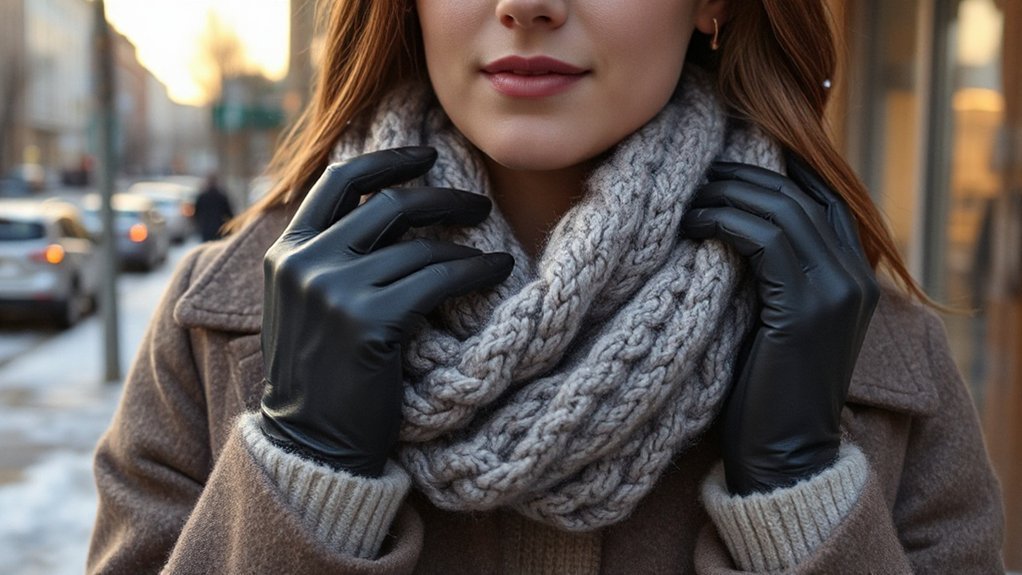
What if the idea that bigger scarves always mean cozier style is actually a myth? You’ll want to test that on your own coat—feel the wool, drape it, tug a corner—because texture and length change everything, and I’ll show you tricks that keep you warm without looking like a duvet; try a Parisian knot one morning, a loose loop the next, notice how colors pop or mute, and you’ll start choosing scarves like a pro.
Key Takeaways
- Choose warm, skin-friendly fabrics (merino, cashmere, or acrylic) based on softness, warmth, and care needs.
- Match or contrast scarf color with your coat, using seasonal palettes and personal preference for cohesion or statement.
- Use classic wraps (drape, Parisian knot, loop-and-tuck) to balance warmth, silhouette, and wind resistance.
- Coordinate scarf texture and length with hat and glove styles, avoiding bulky combos with high-collared coats.
- Care and store scarves properly—air out, spot-clean, fold loosely, and use sachets to keep them fresh.
Choosing the Right Scarf Fabric for Winter
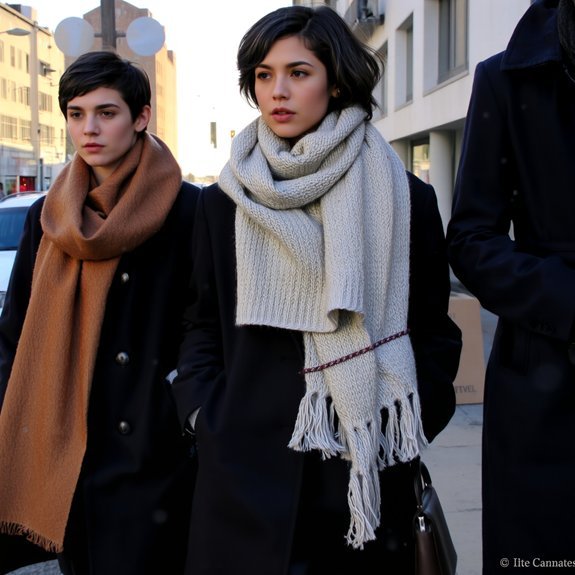
Even before you wrap it around your neck, you’ve got to pick the right fabric — trust me, your future cozy self will thank you. I’ll walk you through fabric types and how they feel against your skin, because awkward scratchy scarves are a tragedy. Wool is classic, dense and warm, it breathes but can itch — try merino for softness. Cashmere feels like a cloud, expensive, but worth the smug grin. Acrylic copies warmth, washes easy, and won’t break your heart or wallet. Cotton’s light, good for milder days, not for blizzards. Consider weave and weight, squeeze the scarf, feel loft and drape, test the collar against your jaw. Match warmth levels to your weather, and don’t be afraid to splurge a little.
Matching Scarf Colors With Your Coat
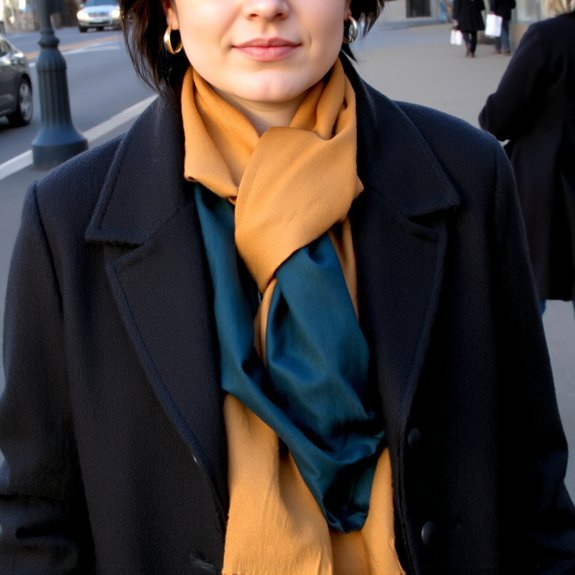
You picked the right fabric, felt it against your jaw, and now you’re faced with the color question — welcome to the fun part. You want your scarf to sing, not fight, with your coat. Start by holding them together, squinting like a stylist, and notice whether they harmonize or clash. Think color coordination: match tones for a streamlined look, contrast boldly for drama. Use seasonal palettes — warm rusts and mustard for fall coats, icy blues and greys for winter, bright pastels to lift spring-weight trenches. Don’t overthink rules, trust your eye. If it feels right, wear it, even if you’ll mock yourself later. Own the choice, tuck the scarf, step outside, and watch people notice.
Proportion and Length: What Works Best
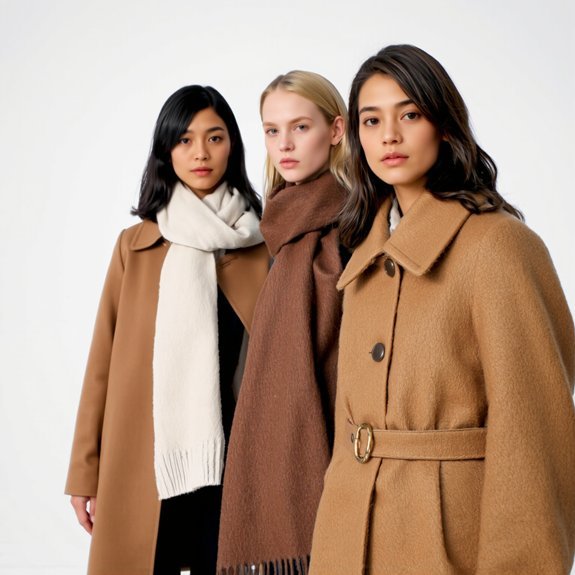
You want your scarf to play nice with your coat, so if you’re wearing a long trench, pick a longer scarf that can loop or hang without looking like it’s trying too hard. Keep bulky knits away from high collars, or balance a chunky wool with an open V-neck so you don’t feel like a marshmallow. Trust me, a quick swap of length or thickness can turn “meh” into “wow” in seconds—try it and feel the difference.
Match Scarf Length to Coat
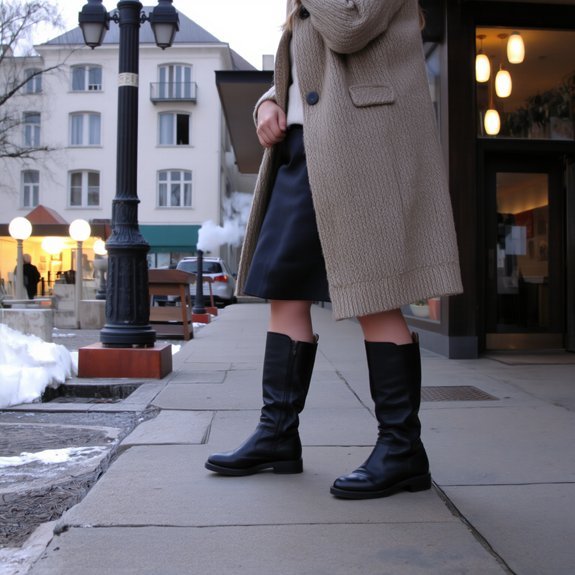
Three things matter when you drape a scarf over a coat: length, proportion, and confidence — yes, confidence. You want scarf length that complements your coat style, not competes with it. If you’re wearing a long, streamlined coat, pick a long scarf, let it hang, feel the fabric brush your knees, it elongates you. Shorter coats call for mid-length scarves, looped once, cozy at the chest, avoiding awkward tails. Bulky parkas tolerate chunky, shorter wraps that keep heat in and look intentional. Try the half-tuck on a tailored pea coat, the full drape on a trench, experiment in the mirror, make small adjustments, listen to the whisper of wool. Own the look, laugh at the odd flop, you’ll nail it.
Balance Bulk With Neckline
Start by feeling the space between your chin and your collarbone — that little real estate decides everything. I want you to test the gap, drape a chunky knit, then a thin silk, listen to fabric whisper or thud. You’ll learn to balance bulk: big scarves need open necklines, or you’ll look swallowed; slim scarves flatter high collars and crewnecks. Spot your neckline shapes — V, scoop, turtleneck — and pick weight and knot accordingly. Short gap? Go lightweight, soft loop. Deep V or coat lapels? Bring texture, pile, dramatic volume. I joke, but seriously: try it, glance in a mirror, tug the ends, and feel the posture shift. You’ll know the right combo when compliments start arriving.
Classic Wraps and Knots for Everyday Warmth
You’ll start with the Classic Drape, letting the scarf glide over your shoulders so it feels like a cozy blanket you didn’t have to cook. Then you’ll tie a Parisian Knot, fold it, loop it, and feel that neat, face-framing hug that says “I tried, sort of.” Finally, try a loop-and-tuck wrap, twist it once, tuck the tail, and enjoy the satisfying click of warmth locking into place.
The Classic Drape
Even if you’re running late and your hair looks like it lost a fight with a wind tunnel, the classic drape will save the day — and your neck. You grab a long wool or cashmere piece — one of those classic scarf types that never quit — and let it fall over your shoulders, no fuss. It frames your coat like a curtain, adds weight at your chest, feels cozy against your jaw. You tuck one end under your collar, let the other hang loose, and suddenly you look deliberate, not frantic. I say this with a coffee-stained mitten and a grin: seasonal scarf trends come and go, but the drape stays classy. It’s easy, warm, and annoyingly flattering.
The Parisian Knot
One simple loop, and you’re Paris-ready — or at least convincingly so. I show you the Parisian Knot because it’s clean, chic, and outrageously practical. You fold a long scarf in half, drape it, slip ends through the loop, tighten near your chin, and voilà. It gives warmth, shape, and a little je ne sais quoi.
- Quick to tie on blustery mornings, saves you from hat-hair panic.
- Works with coats, leather jackets, and oversized sweaters, boosting scarf versatility.
- Looks tailored even when you’re five minutes late, coffee in one hand.
- Keeps drafts out, neck cozy, confidence high.
I’ll admit, it makes me feel smug, like I planned this effortless Parisian elegance.
Loop-and-Tuck Wrap
When the wind decides to audition for a horror movie, the loop-and-tuck wrap is your fast, undefeated comeback—trust me, I’ve tested it on tram rides and Tinder dates. You’ll drape the scarf evenly, loop once around your neck, then tuck one tail through the loop, snugging until warmth sighs into place. It’s tidy, secure, and flattering, a go-to among loop styles. I like it with chunky knit, you’ll like it with silk, both feel deliberate. Watch the silhouette—looser for casual days, tighter for bitter commutes. For clean edges, master simple tuck techniques: feed the fabric under and rotate the tail, then fluff the collar. It looks styled without effort, keeps you warm, and yes, makes you look like you mean business.
Styling a Chunky Knit for Casual Outfits
Chunky knits are my go-to lazy-chic move, the kind of thing you throw on and suddenly look like you meant to be cozy and cool; I’ll show you how to make that happen without looking like you slept in a sweater. You’ll lean into chunky textures, pair a bulky scarf with slim jeans, and balance volume so you don’t vanish under wool. Feel the ribbing, hear the soft thud when you fold it, enjoy the warmth.
- Drape once over one shoulder for instant nonchalance.
- Knot loosely at chest to keep shape, not suffocate your neck.
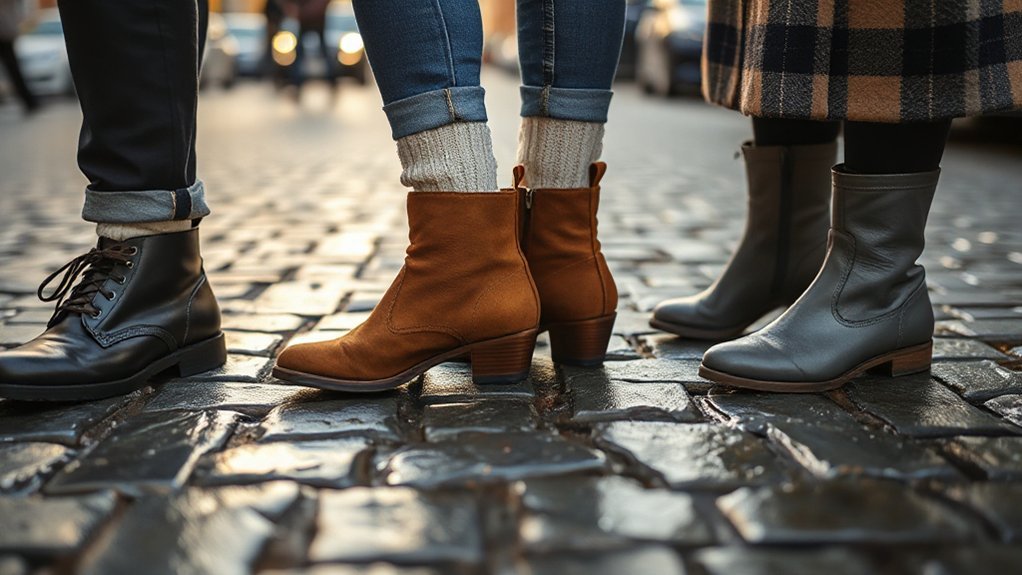
- Pair with ankle boots, cuffed jeans, minimal jewelry.
- Choose neutral or one bold color to avoid chaos.
Try it, tweak it, own the cozy.
Silk and Lightweight Scarves Under Tailored Coats
You’ll want to pick a silk or lightweight scarf that slips under your tailored coat like a secret note, soft against your neck and never adding bulk. Try a delicate knot at the throat, or loop it once and tuck the ends, so you get polish without that puffy muffin look—trust me, I’ve learned the hard way. Stand back, button up, and admire how a whisper of fabric can finish the whole outfit.
Delicate Knot Options
A couple of slim silk scarves can feel like secret jewelry under a stiff tailored coat, and I’m here to show you how to tie them so they whisper confidence instead of shouting “I don’t know what I’m doing.” I’ll walk you through delicate knots that sit close to the neck — no bulk, no sleeves catching, just a soft, glossy band peeking from your collar — and I’ll tell you which ones survive a brisk commute and which ones wilt after lunch. You’ll learn a delicate bow and chic draping, plus neat knots that stay put. Try these:
- Simple slip knot: quick, flat, commuter-proof.
- Tiny bow: feminine, restrained, ties small.
- French loop: tidy, secure, sits low.
- Double wrap tuck: sleek, hidden, office-ready.
Practice takes two minutes, tops.
Layering Without Bulk
If you want warmth without looking like the Michelin Man, silk and other lightweight scarves are your undercoat secret — I’ll show you how to tuck them in so they whisper, not shout. You’ll pick a slim silk, feel it glide, then fold it long and narrow; think thin ribbon, not blanket. Tuck the ends under your tailored coat’s lapels, button up, and enjoy subtle warmth, no bulk. Play texture contrast: matte wool against glossy silk, a tiny rebel flash. Vary scarf lengths—short for choker warmth, long for a hidden tail—both vanish beneath structure. I talk you through finger-smooth folds, a sly tuck behind a pocket, and approve each look with a self-deprecating grin. Simple, smart, cozy.
Layering Multiple Scarves Without Bulk
When the cold hits and you can’t decide on just one scarf, don’t pile them on like a wooly sandwich — layer them smart. You want warmth, not a neck mattress. I’ll show you how to mix light and warm pieces, mixing textures with playful patterns so it looks edited, not accidental.
- Start with a thin cotton or silk scarf, wrap loosely, let it breathe.
- Add a midweight knit, tuck ends under for a smooth silhouette.
- Use a narrow patterned scarf for a pop, knot it neatly at the throat.
- Finish with a soft chunky infinity, draped, not doubled, to avoid bulk.
Feel the fabrics, adjust tension, keep movement easy. It’s stylish, practical, and oddly satisfying.
Accessorizing Scarves With Hats and Gloves
Okay, now let’s dress the whole head-to-toe story. You pick a scarf, then match it to hat styles that echo its mood — beanie for casual warmth, beret for chic tilt, or a brimmed wool for drama; I’ll nudge you toward balance, not costume. Feel the knit against your jaw, the soft scrape, the warm puff. Next, consider glove textures, leather sleek against cable-knit, cozy fleece with silk-lined gloves for warmth without bulk. Try a quick mirror test: tuck the scarf under the hat, pull a loose end over your shoulder, snap a selfie, judge like a ruthless friend. Don’t overthink patterns, coordinate touch and tone, and remember — comfort wins, but looking great is nonnegotiable.
Caring for and Storing Winter Scarves
Because scarves spend most of their lives wrapped around your throat or crammed in a tote, they deserve a little aftercare, and I’m about to show you how not to ruin them — gently, logically, and with minimal laundry drama. You’ll smell wool, feel soft knots, and learn quick cleaning techniques so your favorites last. I talk like I’ve ruined a cashmere once — you will too, unless you follow this.
- Air out after wear, hang on a padded hanger, keep odors and moths at bay.
- Fold loosely for drawer storage solutions, avoid tight rolls that crush fibers.
- Spot-clean with mild detergent, dab don’t rub, rinse cold.
- Store with cedar blocks or lavender sachets, breathe easy, revive texture.
Styling Tips for Different Body Types
If you want your scarf to flatter instead of smother, think of it as an accessory with a job—not a choking hazard. You’ll want to start with body shape considerations: pear? draw attention upward with bright colors and volume near your neck. Apple? keep scarves lightweight, drape long to elongate your torso. Rectangle? add texture, loop once for instant curve. Hourglass? pick balanced proportions, avoid bulky knots that hide your waist. Plus, scarf length adjustments matter: short scarves boost faces, long ones slim hips. Feel the wool, watch the drape, try a twist or loose knot, and listen—if you feel swallowed, it’s not working. I promise, a tiny tweak, and you’ll go from meh to “who put that together?”
Conclusion
You’ve got this. Wrap the right fabric, pick colors that sing with your coat, and tweak length until it flatters—simple, smart moves. I’ll say it plain: scarves are your cozy punctuation, the exclamation point on a frosty day. Experiment with knots, layer without turning into a wool burrito, and match hats and gloves. Store and wash gently, and remember—confidence is the warmest accessory; wear it loud, wear it proud.