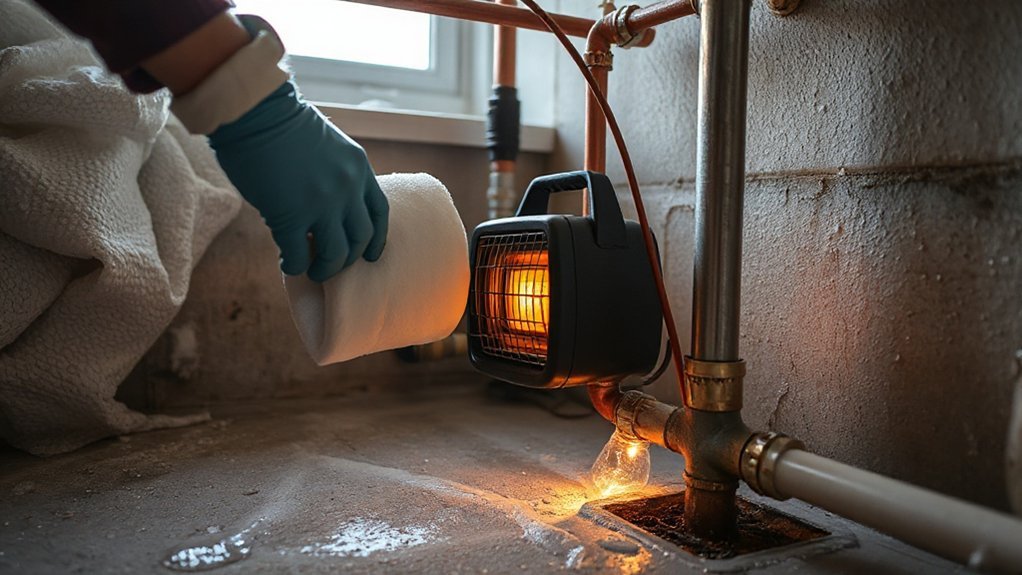
You don’t have to be a plumber to stop pipes from turning into icy cigars in the dead of night — I’ll walk you through the quick fixes and a few smart upgrades that actually work. Feel the draft under the basement door, picture the soft hiss of a dripping faucet you left on, and imagine insulating that exposed copper with a foam hug; you’ll sleep better. Stick around and I’ll show you the fast moves to avoid a winter mess.
Key Takeaways
- Insulate exposed and vulnerable pipes with foam sleeves or fiberglass, focusing on crawlspaces, attics, and exterior walls.
- Keep indoor temperatures steady (use a programmable thermostat) and never let the house fall below freezing.
- Open cabinet doors and allow warm air to circulate around pipes under sinks and near exterior walls.
- Run a slow drip from faucets on cold nights and insulate valve stems and exterior taps.
- Seal drafts where pipes enter walls, and install heat tape on critical runs following manufacturer instructions.
Why Pipes Freeze and How to Spot Vulnerable Areas
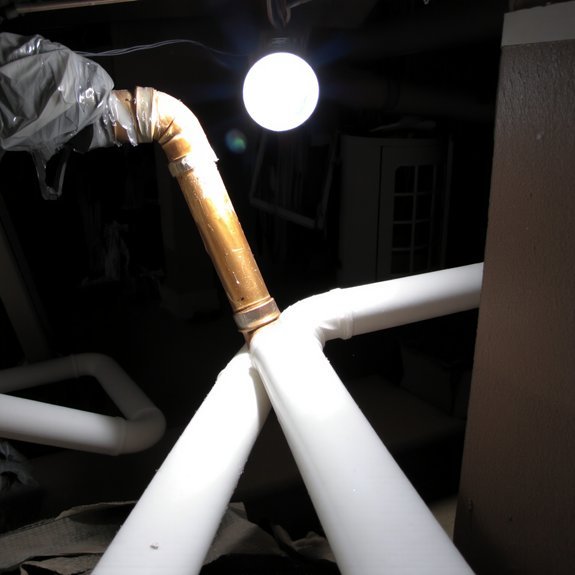
If you’ve ever woken up to a cold, stubborn faucet and felt your heart do a tiny freeze too, you’re not alone — frozen pipes happen because metal and water hate surprises: when temps drop, the water inside contracts, then expands as it freezes, and that expansion builds pressure until the pipe gives. I’ll walk you through the causes of freezing, and show how you spot trouble before it bursts. Look for uninsulated crawlspaces, drafty basements, attic pipes, or exterior walls, feel for icy drafts with your hand, and listen for pinched water lines during cold snaps. You’ll learn to map vulnerabilities, mark them, and plan fixes. Trust me, you’ll catch trouble faster than it catches you.
Insulating Exposed Pipes and Other Simple Upgrades
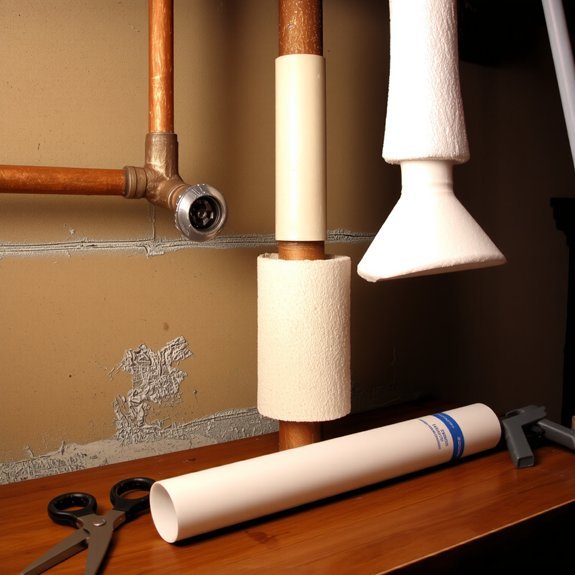
While you’re staring at that frost-prone crawlspace, picturing a geyser of icy water, let me tell you: insulating exposed pipes is the cheap, smug little victory you can score against winter. You’ll feel for cold spots, slap on pipe insulation, and hear quiet confidence replace that nervous clanking. Add heat tape where joins get shivery, plug it in, and relax.
- Measure runs, cut foam sleeves, press seams tight.
- Wrap elbows and valves with extra foam or fiberglass.
- Install heat tape per instructions, avoid overlaps.
- Seal gaps where pipes pierce walls with caulk or foam.
You’ll work gloves-on, breathe damp, earthy crawlspace air, and leave a warmer, sturdier plumbing system that’s oddly satisfying.
Maintaining Safe Indoor Temperatures and Ventilation
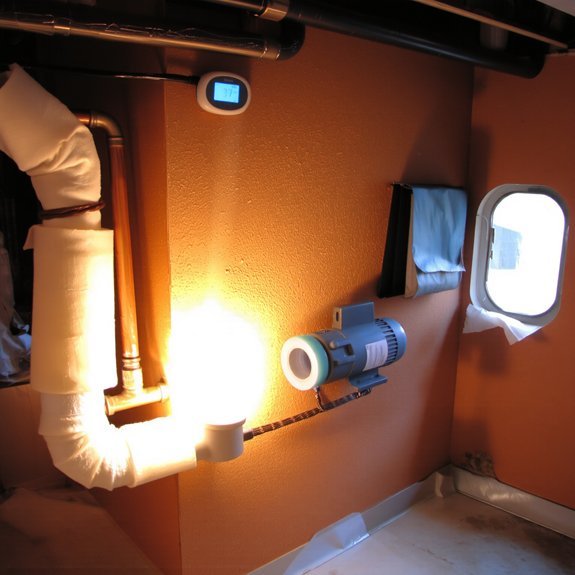
You’ll want to keep your home at a steady, not scorching, temperature so pipes don’t stage a midnight freeze-out — set the thermostat, check it like you check your phone, and sigh in relief when the heater hums. Open vents and crack a window now and then to keep air moving, especially in closets or basements where cold pockets hide, and use a fan if a room feels stuffy. I’ll walk you through easy checks and habits that stop surprises, with no heroic plumbing skills required.
Keep Consistent Indoor Temperature
A few degrees matter more than you’d think, so I make the thermostat my quiet hero and you should, too — set it, forget the dramatic swings, and your pipes will thank you with silence instead of ice-shattering chaos. I keep a steady baseline, because maintaining warmth isn’t heroic, it’s practical, and I check heater efficiency so the system isn’t working overtime and sighing at me.
- Set a consistent temperature, don’t chase hot-cold whims.
- Use a programmable thermostat, it learns your schedule, you win.
- Insulate accessible pipes, feel for cold spots, act fast.
- Service the heater yearly, cleaner parts mean better warmth.
You’ll save stress, you’ll avoid midwinter panic, and you’ll sleep.
Ensure Proper Room Ventilation
Since stale, stuffy air is basically enemy number one for both your comfort and your pipes, I keep rooms moving with purpose — crack a window for a few minutes, nudge a vent open, or let ceiling fans push warm air down the walls so cold pockets don’t hide and freeze my plumbing. You’ll want proper airflow everywhere, especially near exterior walls and under sinks. I open closet doors, aim portable fans into dark corners, and listen for that tiny, satisfied whoosh. Watch humidity control too — damp air chills faster, so run dehumidifiers or exhaust fans after showers. It’s simple theater: warm air circulates, cold retreats. Do this, and you’ll outsmart frozen pipes without drama, just a few smart, noisy moves.
Smart Faucet and Valve Practices During Cold Spells
When frost creeps up the windows and your breath fogs the kitchen light, you’ll want to treat faucets and valves like nervous toddlers—gentle, watched, and ready to be bribed with a little warmth. I promise, you can keep things simple, and feel smug when pipes behave. Install a smart valve where you can, it lets you monitor flow, get alerts, and nudge heat remotely. Keep up faucet maintenance, dribble warm water during deep cold, and open cabinet doors to share heat.
Treat faucets like nervous toddlers—gentle, warmed, and watched; smart valves, drips, and open cabinets keep pipes behaving.
- Check smart valve battery and connection weekly.
- Run a slow, steady drip on exposed faucets overnight.
- Insulate accessible valve stems, not just pipes.
- Test shutoffs gently, mark positions.
Preparing Outdoor Plumbing and Seasonal Shutoff Steps
You’ll want to winterize outdoor faucets first, so grab a wrench, feel the cold metal under your palm, and turn them off like you mean it. Then shut off the outdoor supply at the interior valve, open the spigot to drain leftover water, and listen for that satisfying little drip as the system empties. I’ll hold your cringe while you disconnect hoses and cap things up — we both know frozen pipes are way uglier than this five-minute chore.
Winterize Outdoor Faucets
One quick trick will save you a morning of frantic chipping ice off a frozen hose bib: shut it down, drain it out, and cap it off. You’ll feel clever, smug, and warm inside. Start by clearing the spout, then pull off hoses, they trap water like tiny ice prisons. Slide on outdoor faucet insulation or fit a snug faucet winter cover, you’ll hear the wind complain and your pipes stay silent.
- Turn valve (inside), relieve pressure.
- Drain outdoor line, open faucet until it trickles.
- Install foam or insulated cover, secure with zip tie.
- Store hoses, inspect for cracks, replace if brittle.
Do this quick ritual, and winter loses its leverage.
Shut off Outdoor Supply
Okay, now we shut the outdoor supply off—no dramatic music, just a few clicks and the satisfaction of outsmarting winter. You’ll find the shutoff inside, often in a basement or crawlspace, where the supply line from the outdoor faucet disappears into the wall. Turn the valve clockwise, firm but not brutal, listen for the quiet stop of water, that tiny victory sound. Open the outdoor faucet, let any trapped drips escape, feel the cold air kiss the metal, watch the last bead fall. Drain any hoses, coil them like defeated snakes, stash them away. If there’s a frost-free faucet, still close the indoor valve. You’ve just dodged a plumbing meltdown, and yes, you deserve a smug sip of cocoa.
Emergency Actions When a Pipe Shows Signs of Freezing
Act fast—don’t wait for the pipe to pop like a surprise party gone wrong. You’ll feel the chill first, a hard, metallic breath under the sink. Don’t panic, call your emergency contact if you need help, but move now. Try these steps, in order, and keep calm.
Act fast—feel the chill under the sink, don’t panic; warm, insulate, and open faucets before the pipe gives way.
- Open faucets to relieve pressure, let a trickle run, listen for silence turning into flow.
- Apply temporary heat: hair dryer, space heater (safe distance), or warm towels wrapped tight.
- Insulate exposed pipes with towels or foam, seal drafts with tape or cloth.
- If cracking or bulging appears, shut the main water, call a plumber, and mention the frozen spot.
I talk you through it, quick, steady, mildly heroic.
Conclusion
I’ve seen pipes huff and puff like annoyed dragons, so don’t let yours star in a winter drama. Insulate the cold spots, keep your thermostat steady, let faucets whisper-drip, seal drafts, and shut off outdoor lines when frost’s coming. Install smart valves if you like calm alerts. Act early, act simple. You’ll sleep warmer, avoid frantic pipe surgery at 2 a.m., and feel like a small, competent hero in your own house.