
When Jenna chipped in for a coworker’s funky desk plant last year, you noticed how her whole face lit up—small win, big impact. You’ll learn to spot the little clues: mug slogans, snack drawer stashes, that dog photo taped to the monitor, and you’ll build a short, practical plan so gifts feel thoughtful not awkward. Stick with simple, inclusive choices, but I’ll show you how to make them feel personal—keep going.
Key Takeaways
- Observe coworkers’ tastes through conversations, desk items, and behavior to select gifts that match their interests.
- Set a modest budget or join a group gift to keep offerings thoughtful without financial pressure.
- Prefer neutral, practical items (stationery, snacks, mugs) or non-food alternatives if dietary or cultural concerns exist.
- Avoid overly personal, expensive, or work-related gifts and always check company gifting policies first.
- Present gifts simply and privately when appropriate, include a short note, and apologize if any mistake occurs.
Understanding Office Gift Etiquette

If you’ve ever stood in front of the office break room with a $10 mug and a sinking feeling, you’re not alone — I’ve been there, clutching a too-bright bow like it’s a life raft. You learn fast: gift giving in the office is a dance, not a sprint. Watch body language, listen to small talk, notice what someone’s desk says about them. Don’t overshare, don’t under-think. Match your gesture to the relationship, keep humor safe, and avoid personal items unless you know them well. I’ll admit, I once gave a succulent to a serial plant killer—awkward. Apologize if you stumble, and use a note to explain thoughtfulness. Office relationships reward thought, not price tags, so be human, not flashy.
Setting a Reasonable Budget
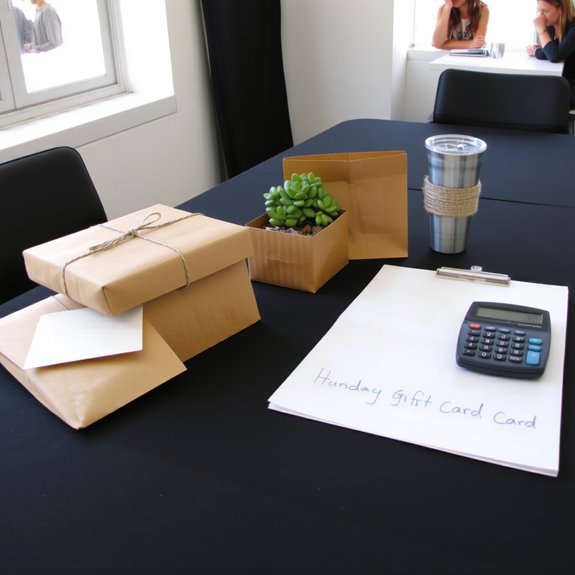
Because budgets are social contracts, not math tests, you should pick a number that feels fair and doable—say the amount that won’t make you calculate rent twice. I tell you this because gift budgeting isn’t glam, it’s common sense. Set a single cap for the team, tuck it in your head, breathe. Picture the card, the ribbon, the little smile—now pick price limits that let you buy something thoughtful without sweating at checkout. Look for cost effective options: nice candles, artisanal snacks, or a $15 mug that looks premium. Split costs for group gifts, or rotate splurges by season. Keep receipts, be consistent, and don’t overthink. You’ll sleep better, your wallet will thank you, and coworkers won’t notice panic.
Reading Personality and Preferences
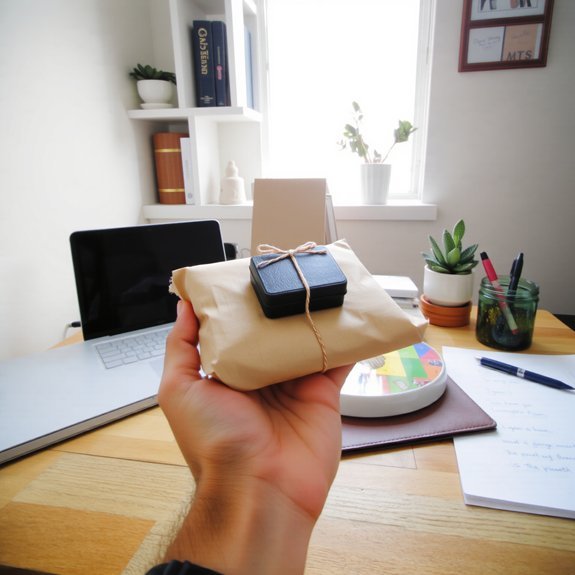
How do you figure out what someone actually wants without turning gift-giving into an embarrassing interrogation? Watch them. Listen when they light up about weekend plans, or grimace at the office coffee. Note their gift preferences—do they gush over gadgets, crave cozy socks, or collect weird succulents? Peek at desk decor, overhear lunch choices, and remember nicknames they use. Personality traits tell you tone: the jokester loves silly, the shy coworker wants discreet, the planner appreciates practical. Ask casual questions, drop hints, trade stories. I once bought a lavender candle after noticing someone inhale deeply at a bakery; nailed it. Trust pattern recognition, not luck. You’ll pick something thoughtful, useful, and perfectly on target—without awkwardness.
Group Gifts vs. Individual Presents
When you’re deciding between chipping in for a big, splashy group gift or sneaking off with something small and perfectly personal, picture the scene: a pile of wrinkled dollar bills in a shoebox versus a carefully wrapped mug that says “World’s Okayest Planner” — both make noises, but very different ones. You’ll want to read the room, notice group dynamics, and weigh visible joy against private delight. Group gifts shout, “We noticed you!” and can pool resources for something fancy. Individual presents whisper, “I picked this for you,” and land softer, closer to the heart. Think about gift preferences, who likes attention, who cringes, who laughs loud. Trust your instincts, ask a teammate discreetly, and choose what’ll feel honest, not performative.
Practical and Professional Suggestions
1 practical rule: aim for useful, not utilitarian. You’ll pick things coworkers actually use, not gray blobs of “function.” Think quality mug, a sturdy notebook, a comfy mouse pad—items that smell faintly of coffee, feel smooth under your hand, and show up in meetings without drama. Keep presentation tidy: simple gift wrapping, neat tape, a tasteful tag. Match office themes—modern minimalist, cozy plants, or bright tech—and let that guide color and style. Don’t overthink personality, don’t give a tool that screams “DIY therapy.” If you’re unsure, ask HR norms, or whisper to a teammate. I’ll admit, I’ve wrapped the wrong size box before; learned fast. Practical, professional, slightly stylish—that’s your sweet spot.
Personalized Yet Appropriate Options
If you want a gift to feel personal without wobbling into TMI, aim for small, deliberate touches that say “I noticed you” without saying “I followed your Instagram.” I like to start with something they actually use—a pen that clicks crisply, a notebook whose pages whisper when you flip them, a coffee tumbler that keeps steam in and spills out only on bad days—then add one tiny, tasteful flourish: their initials embossed in a corner, a bookmark stamped with a favorite quote, a discreet color switch to match their desk plant.
You’ll pick unique items and deliver thoughtful gestures that feel curated, not creepy. Try these ideas:
- Engraved pen, smooth ink, subtle initials.
- Pocket notebook, linen cover, a witty inside note.
- Thermal mug, muted hue, silicone lid.
- Desk plant marker, tiny brass, hand-stamped.
Handling Dietary, Cultural, and Religious Considerations
You’ll want to ask about dietary restrictions up front, because handing someone a box of truffles when they’re allergic to nuts is awkward and smells like poor planning. I’ll remind you to respect religious observances too—skip alcohol or certain foods around holidays, or offer a tasteful non-food alternative, and watch the timing so you’re not gifting during a solemn period. Celebrate cultural diversity by choosing items that feel inclusive and thoughtful, not stereotyped; think bright tea blends, a cozy desk plant, or a handwritten note that shows you noticed.
Dietary Restrictions Awareness
While I’m all for surprising coworkers with treats, I’ve learned the hard way that a chocolate-covered “oops” can sour a good vibe faster than stale coffee, so let’s talk about dietary boundaries before anyone bites in. You want to be thoughtful, not the person who hands out peanuts and regret. Ask quietly, label clearly, and choose vegan options or gluten free alternatives when unsure. Consider nut allergies and beloved cultural dishes, and avoid assumptions.
- Ask one-on-one, casually, “Any food rules I should know?”
- Label snacks with ingredients, big and bold.
- Offer wrapped, single-serve choices, so sharing’s safe.
- Keep a backup non-food gift, just in case.
Respect Religious Observances
When I’m picking gifts for coworkers, I treat religious observances like a polite but non-negotiable speed bump—slow down, look both ways, don’t try to race it. You ask, you listen, you notice small cues: a pendant with a religious symbol, holidays they mention, food they politely decline. Don’t guess. Don’t gift wine to someone who can’t drink it, or a talisman if you’re unsure of meaning. Swap edible treats for cozy stationery, or a gift card with a clear note. Use cultural sensitivity like a flashlight in dim parking—helpful, not blinding. Say, “Tell me if this isn’t right,” and mean it. Gifts should make people smile, not apologize later. Simple, thoughtful, respectful—that’s your win.
Celebrate Cultural Diversity
If you want your gift to land like a hug instead of a head-scratcher, start by treating food, faith, and family customs like the secret ingredients they are—I taste, I ask, I don’t assume. You’ll learn cultural significance by listening, not guessing. Smell spices, hear stories, note holidays. Ask, “Is this okay?” or offer a choice. Inclusive gifting is about options, not offense. Be curious, be humble, and keep it simple.
- Swap ambiguous treats for labeled, allergen-free snacks, so everyone can nibble.
- Choose experiences — a museum pass — that respect beliefs.
- Wrap in neutral colors, avoid religious symbols unless invited.
- Offer a gift card, with a note, saying, “Pick what fits you.”
Presentation, Timing, and Messaging
Because the wrapping, the moment you hand it over, and the words you say can make a $10 mug feel like a treasure, I’m going to walk you through how to stage the whole thing so it lands right: pick paper that crinkles like good intentions, tuck the tag neatly under the ribbon so it doesn’t flop, and practice one short line you’ll actually remember—no speeches, just a warm “I thought of you.” I’ll also tell you when to give it — not during the busiest Monday morning scramble or the three-person lunch huddle where everyone’s chewing — and how to read the room so your timing feels thoughtful, not performative. Use clean gift presentation, choose thoughtful timing, smile, hand it casually, and keep your line simple.
When Not to Give a Gift
Don’t hand out gifts if they’ll make someone squirm, or turn a friendly gesture into an awkward obligation — you can feel that tiny tightness in the room, like a door closing. Never give during performance reviews, that’s a minefield where intentions get misread and HR gets interested. And if your company policy nixes it, stop — don’t be the person who brings treats and an ethics complaint.
When It Creates Pressure
When a gift starts feeling like a duty instead of a delight, I stop and listen to that little knot in my stomach; it’s the giveaway that pressure’s piled on. You can smell the tension, hear colleagues whispering about reciprocity, and feel gift anxiety creep up your spine. Office dynamics matter more than you think — don’t let a present turn into a transaction.
- Someone expects something big, so your card feels tiny and awkward.
- Team leaders hint at gifts, creating a compulsory vibe you didn’t sign up for.
- Peers compare budgets loudly, making generosity a public contest.
- A private farewell turns into an obligatory, expensive ritual.
If any box is checked, skip the gift or offer a low-pressure gesture instead.
During Performance Reviews
Okay, hear me out: you’ve just survived the awkward group gift drama, now picture walking into a performance review carrying a wrapped box like it’s a casserole for the boss. Don’t. Performance review gifts scream mixed signals, they muddy feedback, and they make coworkers squirm. You want coworker appreciation to feel genuine, not like a bribe with ribbon. Save tangible treats for small wins, team lunches, or thank-you notes that sit beside someone’s keyboard. If you’re tempted, breathe, tuck the present away, and write a crisp, honest email praising work instead. I do this myself, often—less awkward, more impact. Reviews should focus on growth, numbers, and clear next steps, not glittery distractions or the weirdness of secret Santa vibes.
If It Breaches Policy
If a gift could actually land you in trouble, tuck it back in your tote and breathe—seriously, I’ve learned the hard way that good intentions don’t trump policy. I tell you this because gift policies and workplace guidelines aren’t abstract—they’re rules with teeth, and you don’t want your name in HR’s inbox at 4:45 p.m. while the fluorescent lights hum.
- A client’s branded bottle? Check policy, don’t guess.
- Cash, gift cards, or steep discounts? Those usually ring alarm bells.
- Luxury items for bosses? That’s a red flag, slow your roll.
- Anything tied to contracts or vendor deals? Put it down, walk away.
I’ll admit, I’ve fumbled, but now I choose safe, sincere gestures.
Conclusion
You’ve got this—choosing coworker gifts isn’t rocket science, it’s people science. Notice their mug, overhear their snack obsession, set a sane budget, and pick something useful or sweet. When in doubt, go group, go practical, or add a tiny personal touch. Wrap it neatly, write a warm note, and skip gifts that cross boundaries. Do it with humor, respect, and a hint of flair—you’ll make someone’s day, maybe even the whole office’s.