
You should start thinking about HBCUs by junior year, maybe even earlier—trust me, it saves you from panic and ramen dinners. I’ll walk you through campus visits that smell like fresh-cut grass, essay moves that actually sound like you, test prep that builds muscle, and extracurriculars that tell a story, not a resume; you’ll get timelines, letter tips, and scholarship angles, but first—let’s map out what to do this spring so you don’t scramble senior fall.
Key Takeaways
- Start researching HBCUs and campus visits in junior year to build a college list and understand fit and programs.
- Begin PSAT/SAT/ACT prep junior year and schedule official tests early senior year if needed.
- Draft and refine application essays during winter of junior year to avoid senior-year rush.
- Request teacher recommendations and gather transcripts at the start of senior year or late junior year.
- Submit early applications and financial aid forms as soon as senior fall opens, and track deadlines closely.
Why Starting Early Matters for HBCU Applications
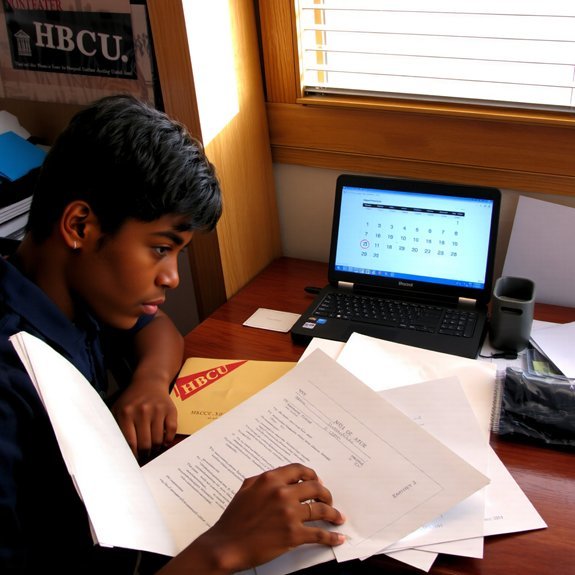
Because you’ll thank yourself later, start early—really early—when applying to HBCUs. You’ll get a calm headspace, not the usual sweaty, midnight essay panic. I mean it: you can taste coffee and relief instead of bitter chaos. Start sophomore year or at latest junior year; scout campuses on Saturdays, ask admissions questions, tape brochures to your wall. You’ll build a timeline, collect transcripts, and polish essays without drama. You’ll also find mentors—teachers who actually remember your name—and spot scholarships before they vanish. Early moves let you tailor applications to each HBCU’s vibe, so your voice lands true. Trust me, being early turns frantic guessing into confident choice, and that feels, honestly, kind of glorious.
Building a Strong Academic Foundation From Freshman Year

You start freshman year by locking in those core classes—English, math, science, social studies—so your transcript sings instead of whispers. I’ll tell you, habit beats talent every time, so set a study rhythm now: short, focused sessions, notes you actually understand, and a planner that won’t ghost you. Picture yourself at the kitchen table, pencil scraping, coffee cooling, and know those small, steady moves build the GPA and confidence HBCUs notice.
Start With Core Classes
If you want to stand out on HBCU applications, start treating freshman-year core classes like the VIP section of your transcript—show up, pay attention, and don’t sneak out early. I’ll be blunt: those classes set your academic tone. You walk into math, English, science, and social studies with a pencil, curiosity, and a plan. Take neat notes, ask one good question, volunteer for that lab demo, and let your teacher notice you. When report card day comes, your steady A’s hum louder than a late-semester cram session. Think of it like planting bulbs—water them now, enjoy the bloom later. You won’t need magic, just consistent choices, a little pride, and the courage to raise your hand first.
Build Consistent Study Habits
When you treat studying like a daily routine instead of a panic party the night before, your whole school life gets quieter and smarter; trust me, it’s weirdly satisfying. I tell you this because habits beat heroic cramming. Start small: fifteen focused minutes after school, no phone, a glass of water nearby, pencil tapping like a tiny metronome. Build up to blocks, mix subjects, use color notes that actually make you smile. Test yourself, close the book, explain it out loud like a frustrated teacher. Track wins in a tiny calendar—those little Xs feel addictive. When projects loom, you’ll already have momentum, not chaos. It’s boringly glorious, and honestly, you’ll thank your future self for being so annoyingly reliable.
Extracurriculars, Leadership, and Community Service to Highlight

You’ll want to spotlight the leadership roles you actually held, not the ones you wished you’d had—say “captain who organized weekend drills,” not just “team member.” Show the smell of paint and late-night pizza from community service nights, the measurable impact you made, and how your activities cluster into a clear, meaningful focus. I’ll push you to pick the strongest few extracurriculars, narrate what you did, and explain why they matter to HBCUs.
Leadership Roles Held
Since leadership isn’t just a bullet on your resume, I want you to picture the loud clatter of the school cafeteria, your name being called as club president, the sticky cafeteria tray in your hand, and the sudden hush as you make a quick, slightly awkward speech—yeah, that moment counts. You’ve run meetings, juggled schedules, and convinced sleepy teammates to show up. You’ve handled drama, filed budgets, and learned to delegate without sounding bossy. Admissions want to see roles where you changed something, even a little. Say what you did, not just your title. Use specifics: number of members, events launched, problems solved. Be honest about missteps — they teach you more than perfect wins. Wrap it with one clear, punchy result.
Community Service Impact
Think of community service like a worn pair of sneakers — practical, a little scuffed, but showing you’ve actually been walking the walk. You’ll want to note where you showed up, what you did, and the smell of wet mulch after planting trees at the park. Say you tutored math, logged hours, adapted a lesson when a kid blanked out, and felt that small, proud sting when they finally got it. Don’t just list hours; show problem-solving, teamwork, and consistency. Colleges at HBCUs care about impact, not vanity metrics. Mention the community you served, the skill you honed, and a quick result — better grades, cleaner lots, warmer seniors. Be honest, specific, and a little human.
Meaningful Extracurriculars Concentration
Okay, enough about planting trees and that tang of wet mulch on your fingers — now let’s talk about where you actually focus your energy. You don’t need a trophy room, you need a concentrated cluster of activities that show depth. Pick two or three things and go deep: captain the debate team, run a community health drive, or start a coding club that meets in the library’s hum of fluorescent light. Lead, don’t just attend. Track hours, collect stories, photograph messy sign-up sheets, jot volunteers’ names. Admissions want growth, impact, consistency. Show a clear arc: beginner awkwardness, steady grind, measurable wins. I’ll be blunt—you’re selling commitment, not busyness. That focused narrative? It’ll hum on your application like a good hook.
Preparing for Standardized Tests and Improving Scores
When you walk into a test prep room, you’ll smell the faint tang of coffee and anxiety, and I’ll bet your palms go a little clammy—welcome to the standardized-test jungle, where a few smart habits beat frantic cramming every time. You’ll start by taking a timed practice test, raw and honest, then I’ll help you spot the weak spots—grammar? algebra? pacing?—and we’ll make them tiny, fixable targets. Drill smart: short timed sections, review mistakes aloud, and use flashcards for formulas and vocabulary you actually need. Build stamina with weekly full-lengths, simulate test day cues—watch the clock, eat the same breakfast—and celebrate small score jumps. Sleep matters; don’t be the caffeine zombie. You’ve got this.
Campus Visits, Virtual Tours, and Connecting With Admissions
Because campus visits show you more than a glossy brochure ever can, you should treat them like undercover investigations—sneak in, observe, and take notes. I mean it: smell the cafeteria, sit in a quad bench, time the walk to class. If you can’t visit, tour online, pause, zoom, and compare dorm layouts like a picky roommate. Call admissions, ask real questions—housing waitlists, support programs, scholarship deadlines—don’t wing it. Chat with current students, even grab coffee if they’ll let you, and listen more than you talk. Take photos, jot impressions, rate vibes. Keep a spreadsheet, yes I’m that nerd, so when applications open you pick schools that felt right, not pretty.
Crafting Compelling Essays and Personal Statements
You poked the campus couch, sniffed the cafeteria mystery meat, and took notes like a secret agent — good, because now you’ve got to tell a story that makes admissions officers feel like they were right there with you. You’ll pick one vivid moment, smell, or sound, then zoom in. Show, don’t tell — let them hear your laugh, see your hands fidget, taste that burnt pizza. Be honest, skip clichés, and own the awkward bits; vulnerability lands harder than perfection. Open with a hook, move with purpose, and close on what changed — who you are now, and why HBCUs fit that you. Edit like a surgeon, get feedback, read aloud, then cut the fluff.
Timeline and Checklist for Junior and Senior Year Tasks
If you start junior year like I did — half-excited, half-panicked, sticky-note blitz on my desk — you’ll thank yourself later. You’ll map deadlines, sketch campus-visit Saturdays, and set reminders that buzz like tiny alarms of hope. Fall: pick teachers for recs, join clubs that actually matter, and take the PSAT seriously — it’s a practice that bites back if you shrug. Winter: start drafts for essays, meet counselors, and lock in test dates. Spring: visit HBCUs, request info packets, and refine your résumé. Summer before senior year: finalize essays, snag recommendations, and build your application checklist. Senior fall: submit early apps, track confirmations, and celebrate small wins. Senior winter: complete final forms, follow up, breathe.
Conclusion
Start early, you’ll thank me later. Picture folders of essays, recommendation notes taped like polaroids, campus maps folded into your back pocket. Begin in junior year, polish scores, lead a club, volunteer, visit, and rewrite that essay until it sings. I’ll be blunt: last-minute panic smells terrible and shows. Move with steady steps, not a sprint; you’ll walk into HBCU applications calm, confident, and exactly where you meant to be.
Leave a Reply